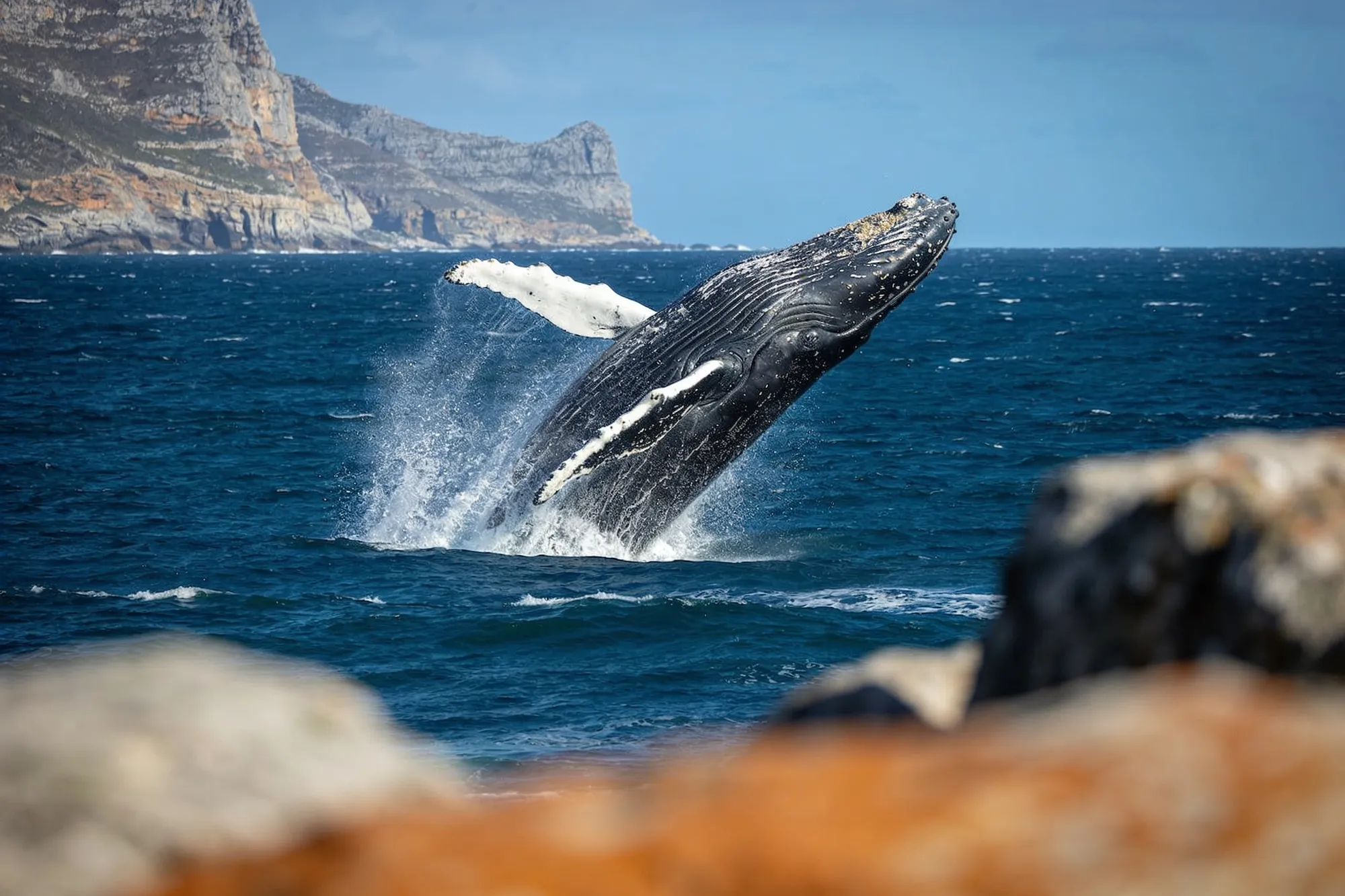
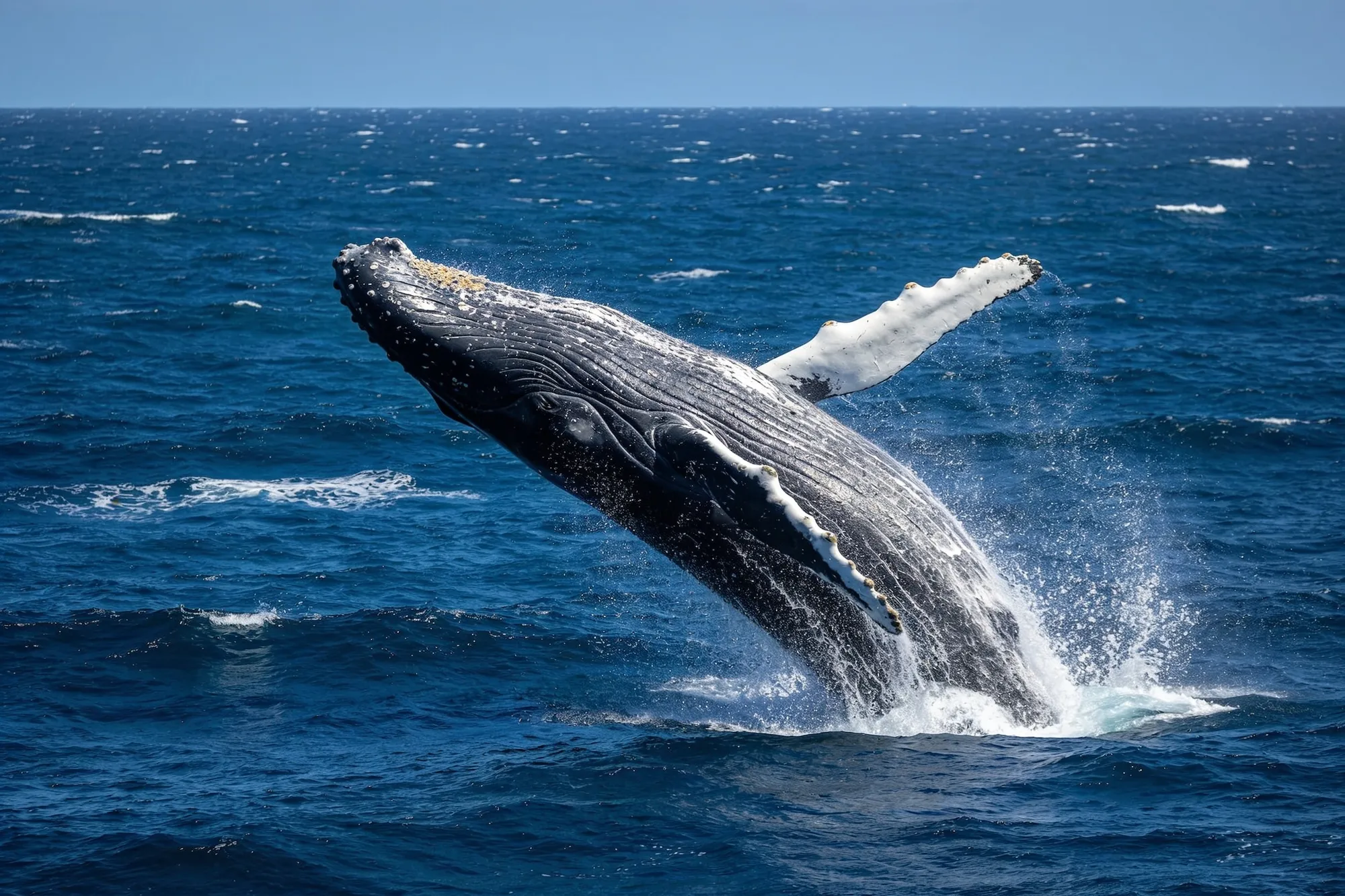
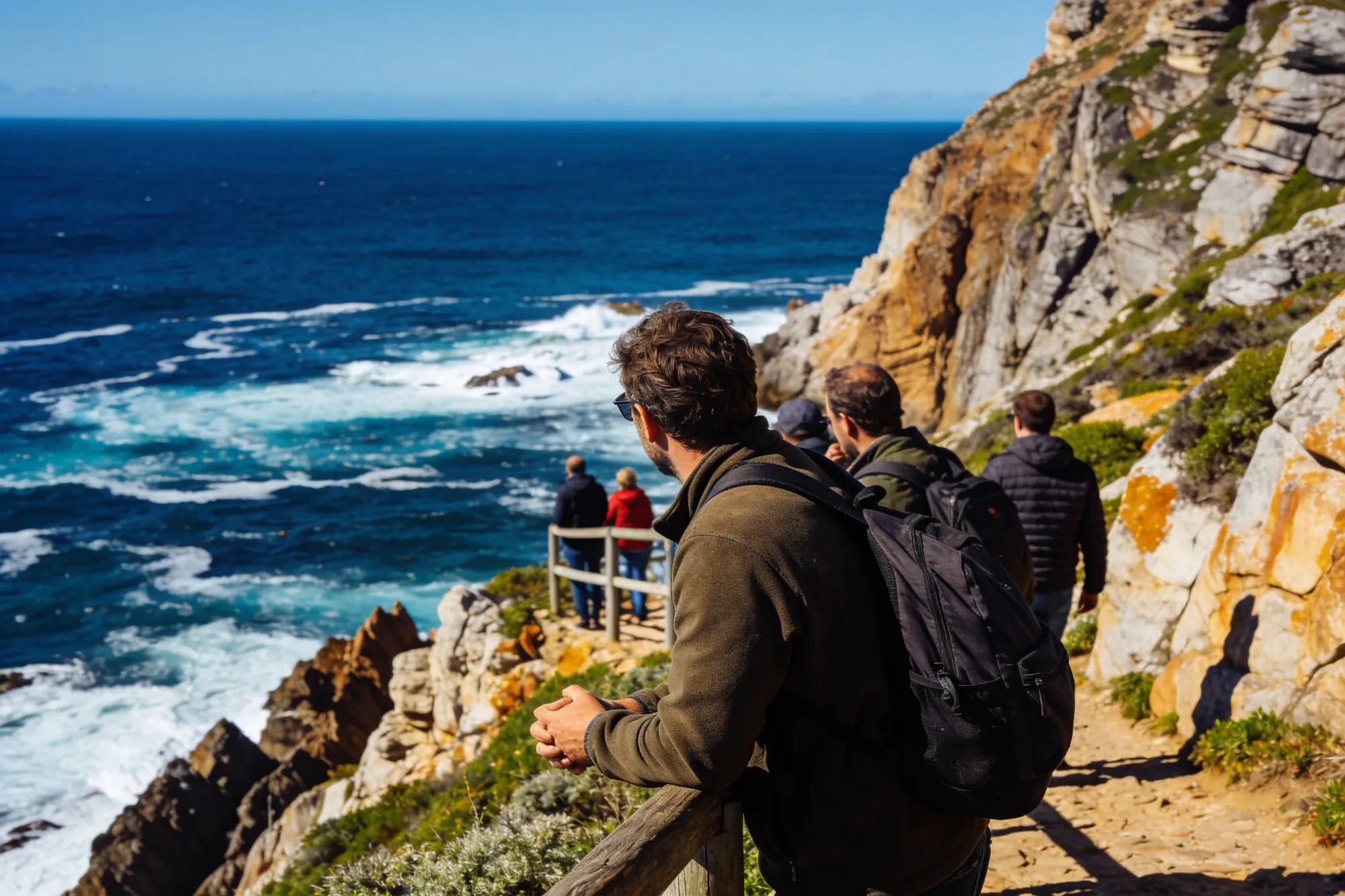
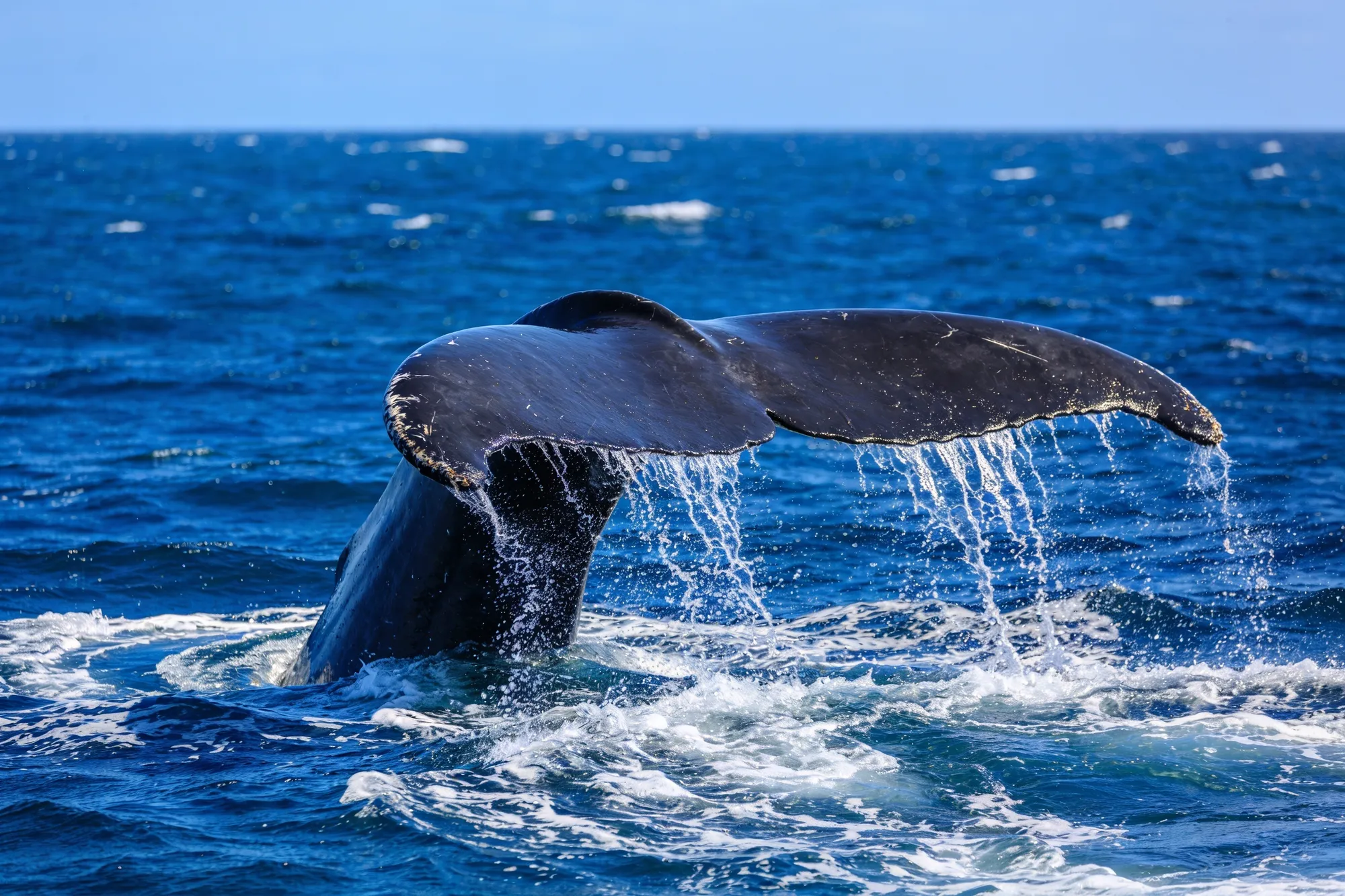
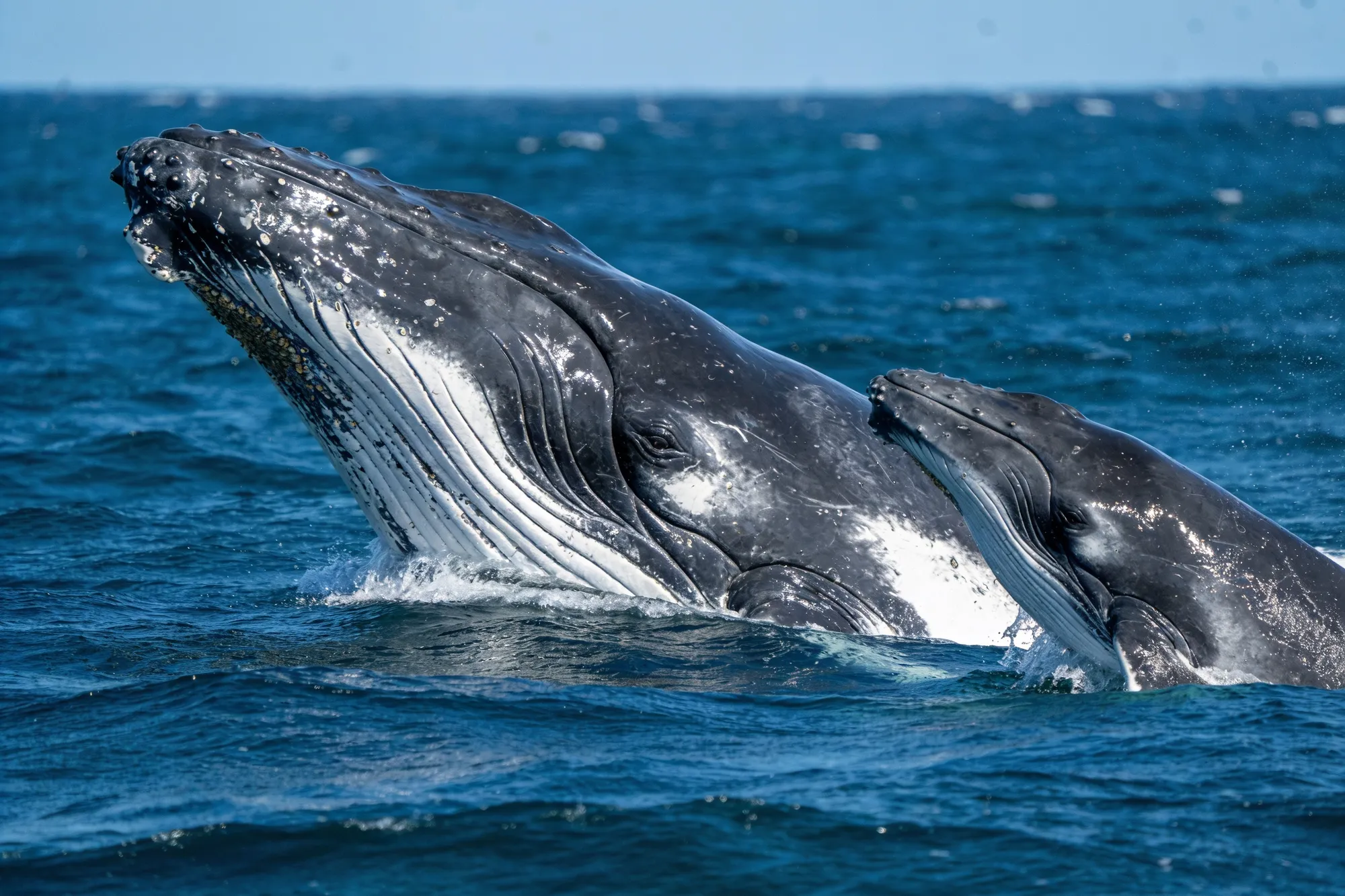
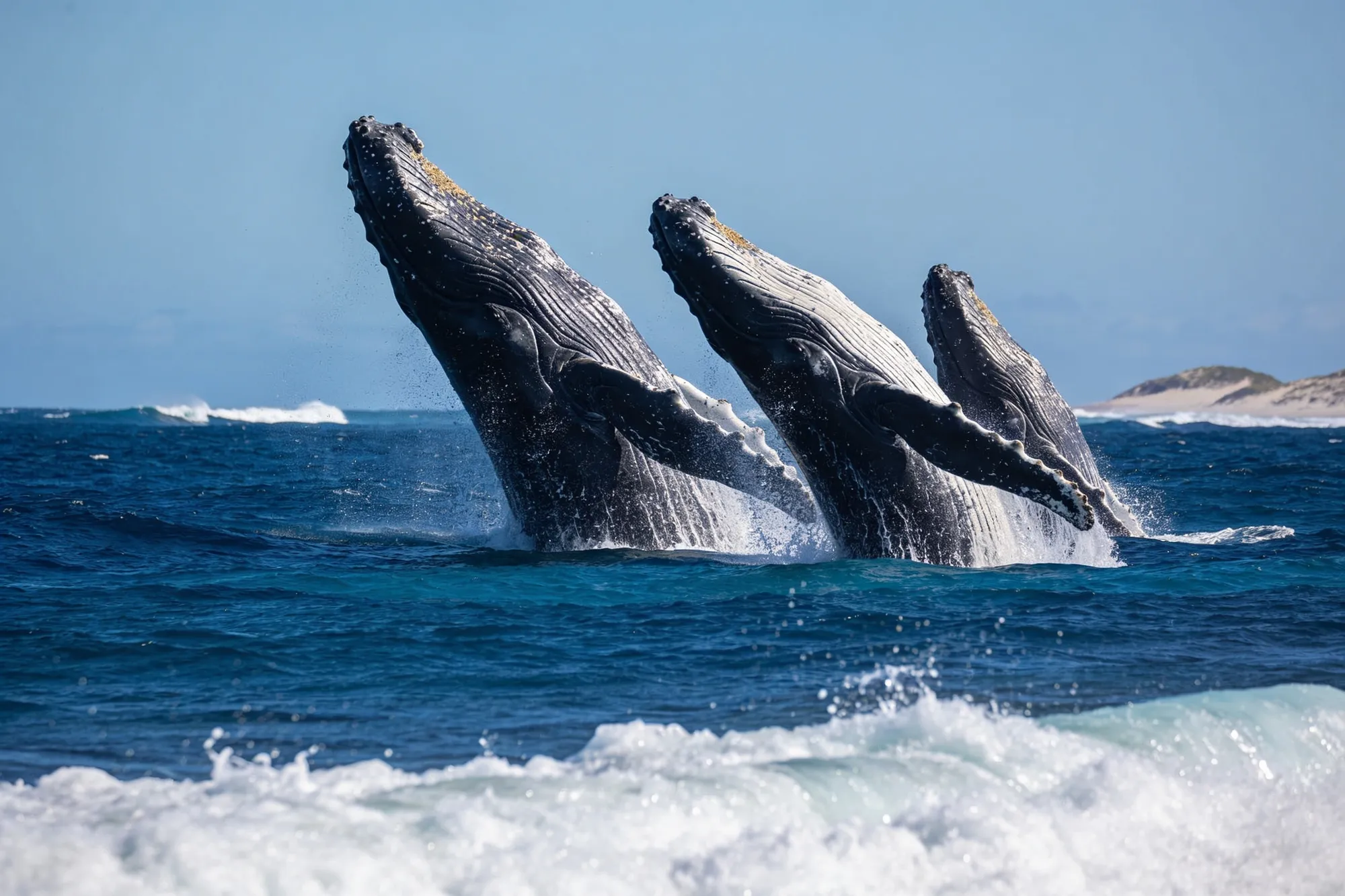
For six months a year, some of the biggest animals on earth come to within a few metres of the South African shore. Southern right whales swim up from the Antarctic to breed and calve in the sheltered bays of the Western Cape, and from roughly June to November you can watch them roll, breach and nurse their young from a cliff path, no boat required. The peak is spring, September and October, when the bays are busiest and the calves are out. That land-based access is what makes whale watching here different from almost anywhere else.
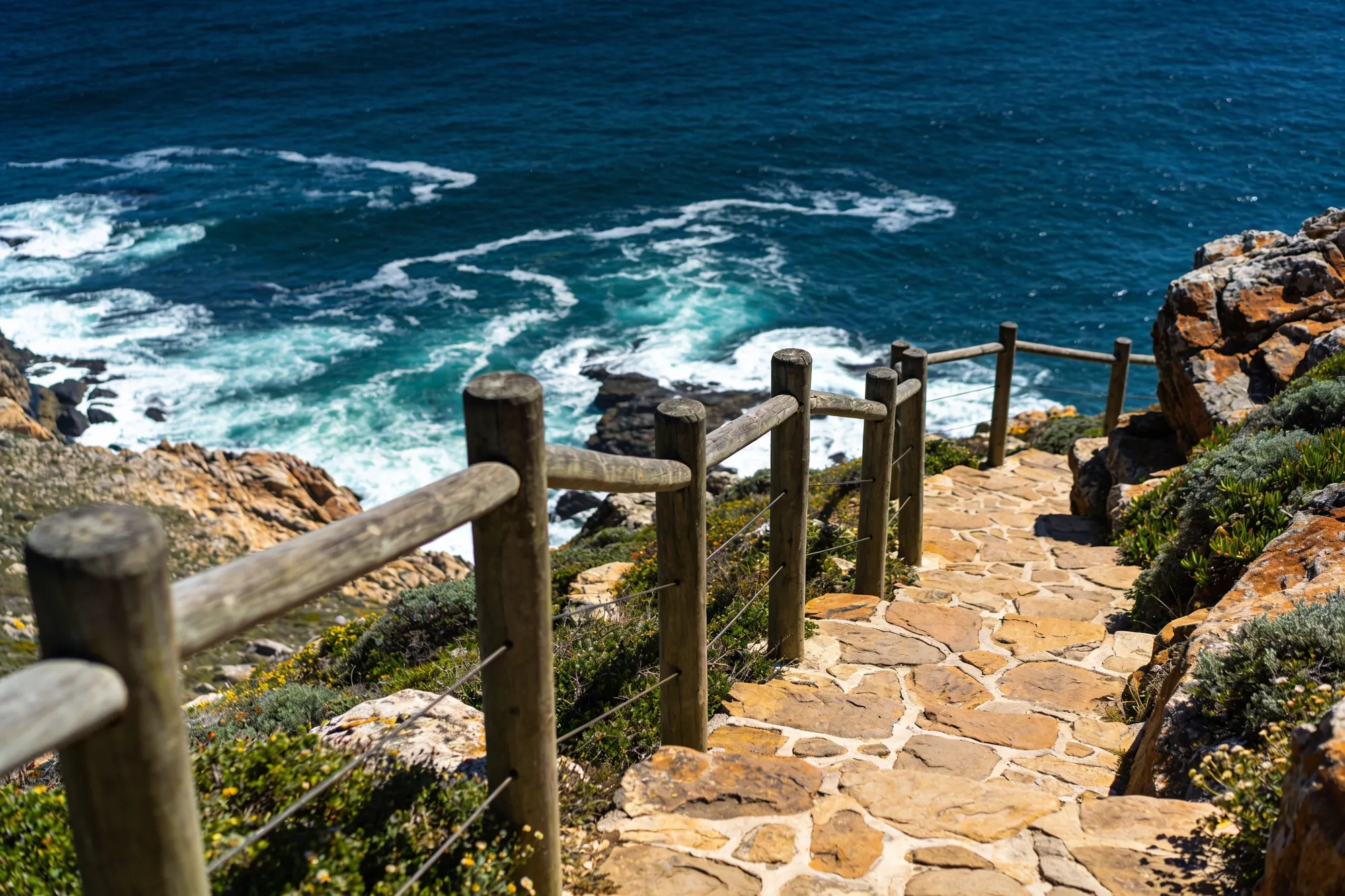
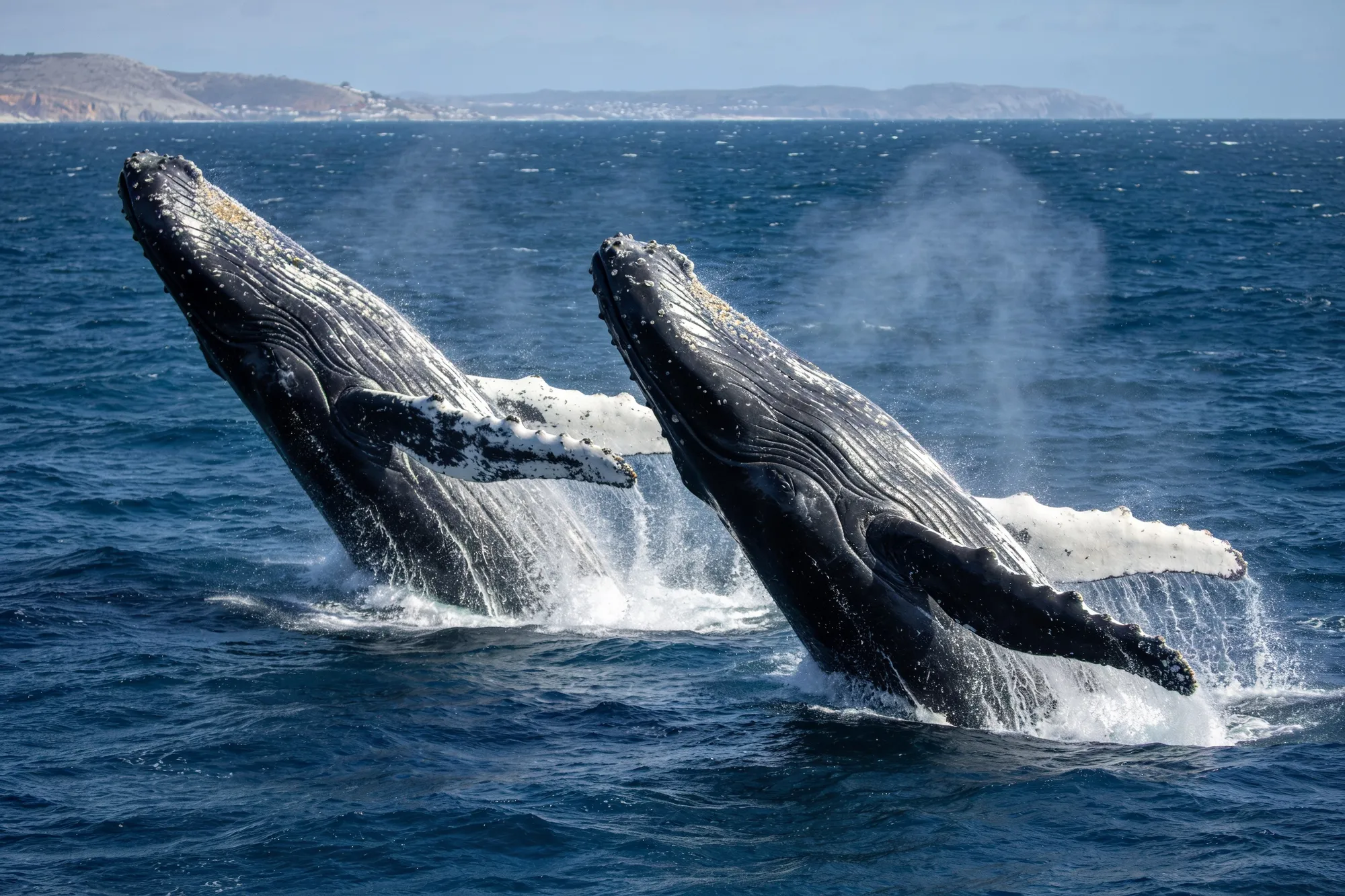
Hermanus is the centre of it. The cliff path above Walker Bay runs for kilometres, the whales come in close enough to watch from a bench, and the town still keeps a whale crier who sounds a kelp horn when one is spotted. The Whale Festival takes over the first weekend of October. Just east, De Hoop’s Koppie Alleen offers the same whales with a fraction of the crowd. The species you see from land is almost always the southern right, broad and black with no dorsal fin. Humpbacks, which migrate further out, and the resident Bryde’s whale are more of a boat proposition.
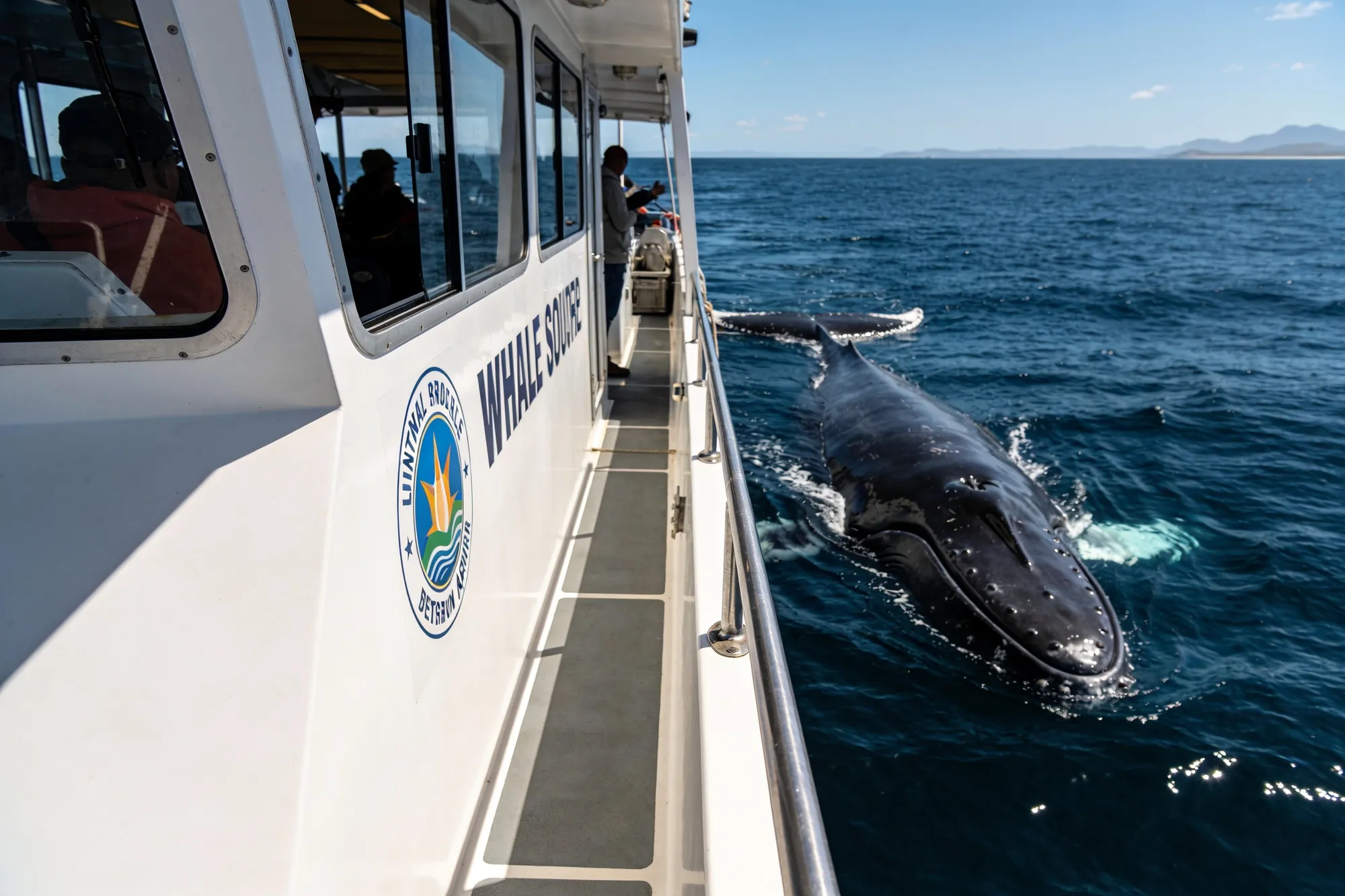
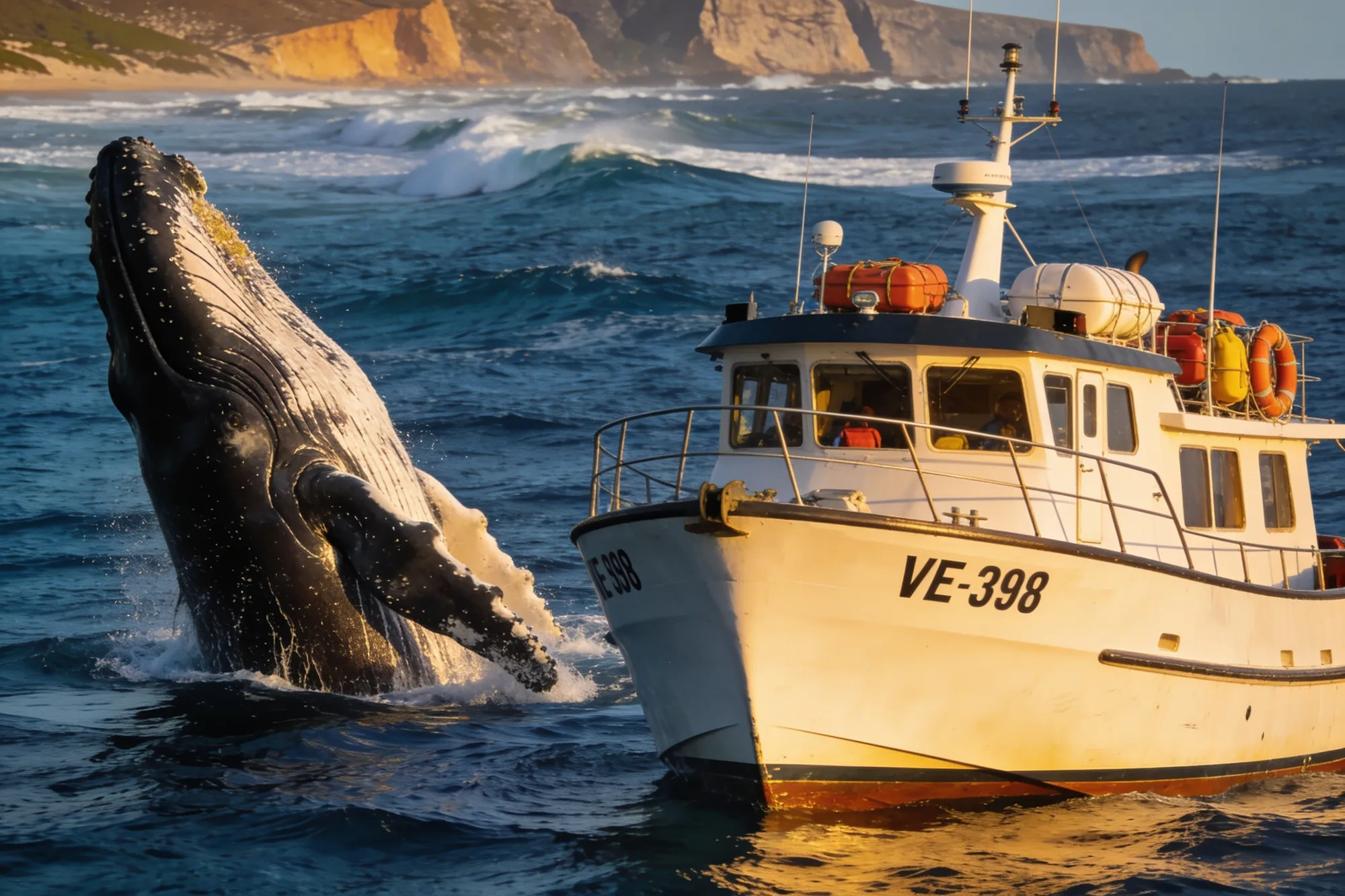
So the real question is land or boat. From the cliffs the view is free, calm and never cancelled, and for southern rights it is genuinely enough. A boat gets you lower and closer, but only if you book a licensed boat-based whale watching operator, the ones permitted to approach to about 50 metres while everyone else must keep 300 metres off. Boats also depend on the sea, so leave a spare day. The season stretches beyond Hermanus too, to Plettenberg Bay and Knysna on the Garden Route, and to False Bay near Cape Town early and late in the year, so wherever your trip runs in winter, there is usually a whale within reach.