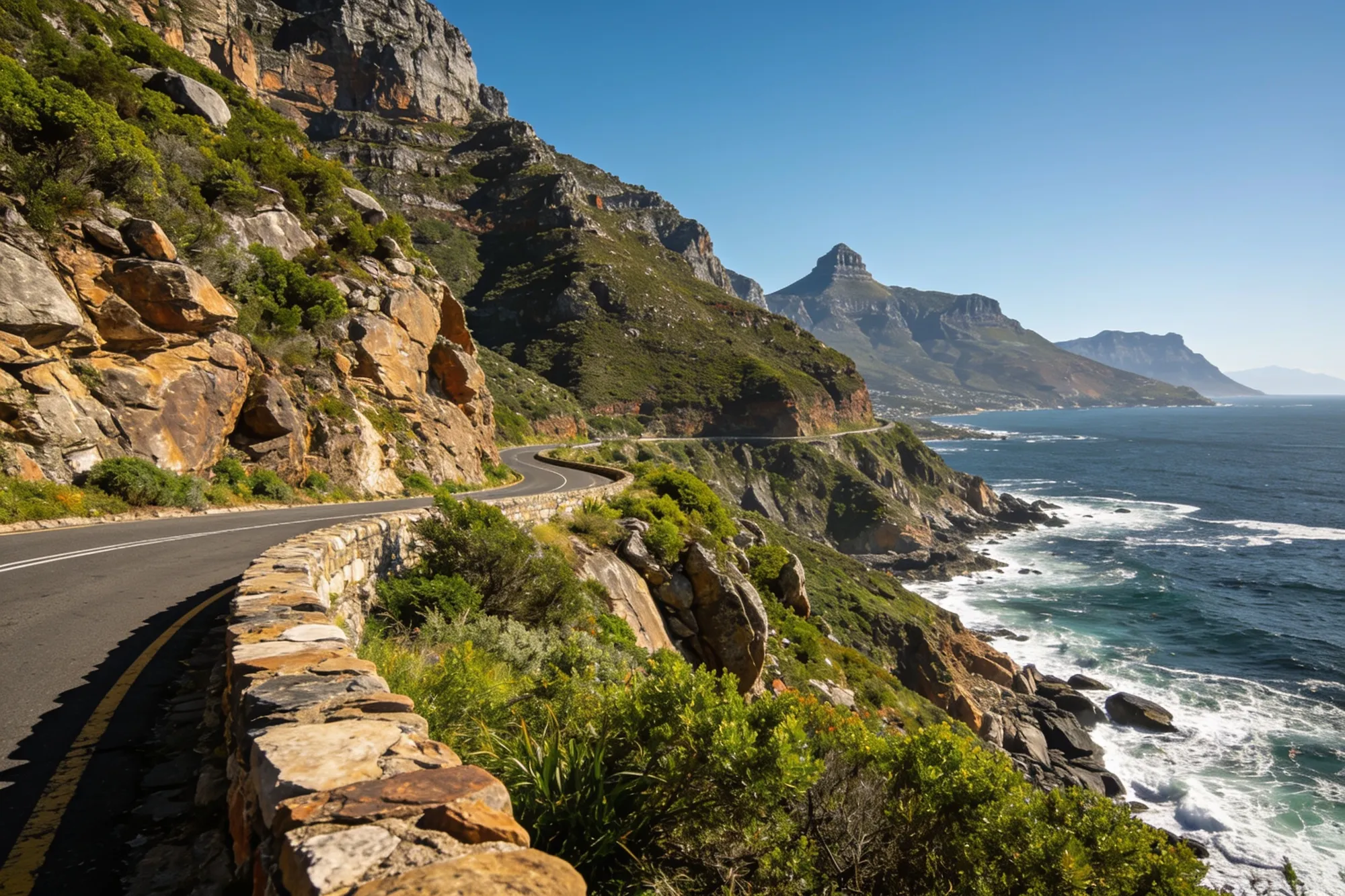
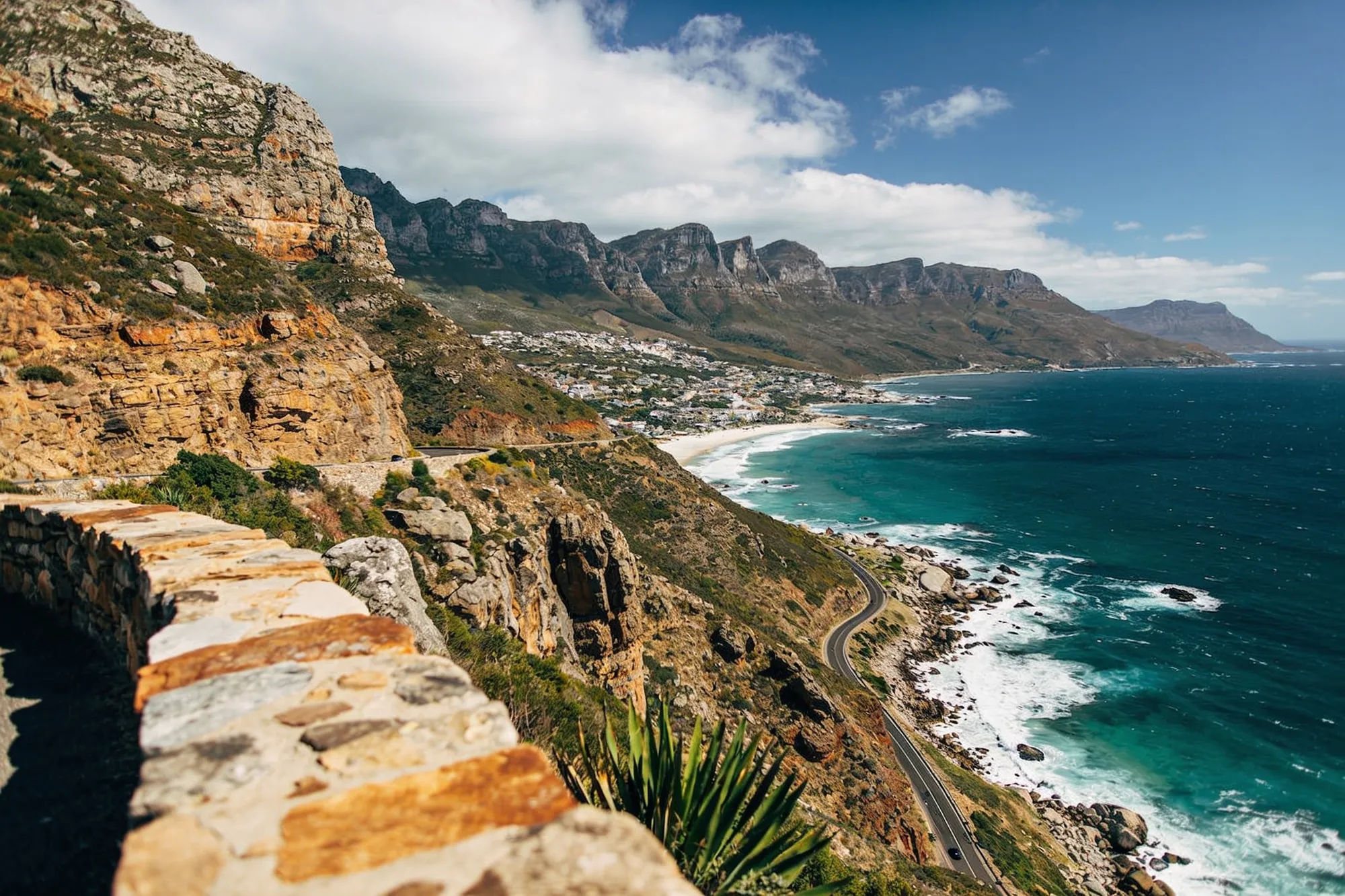
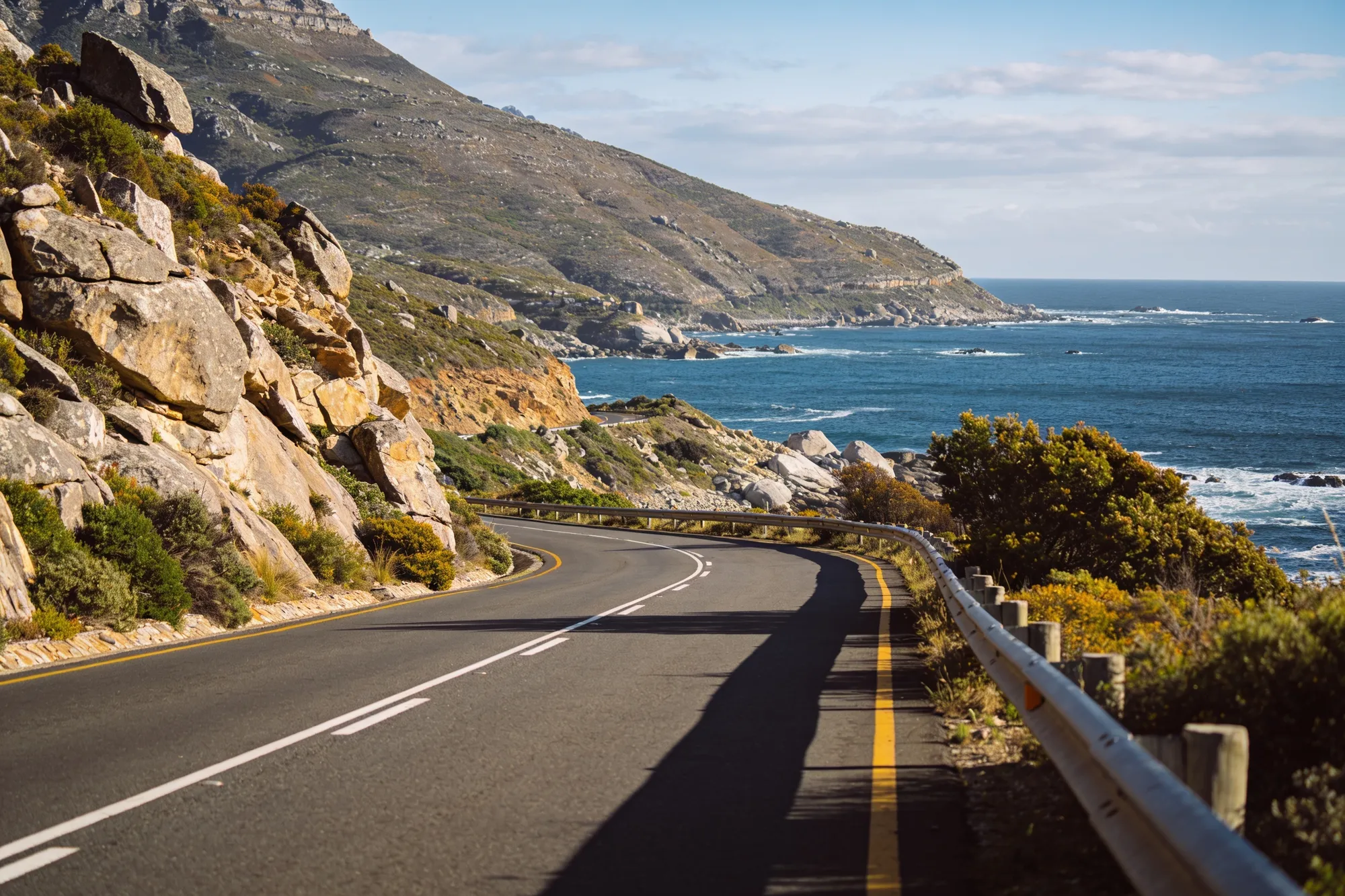
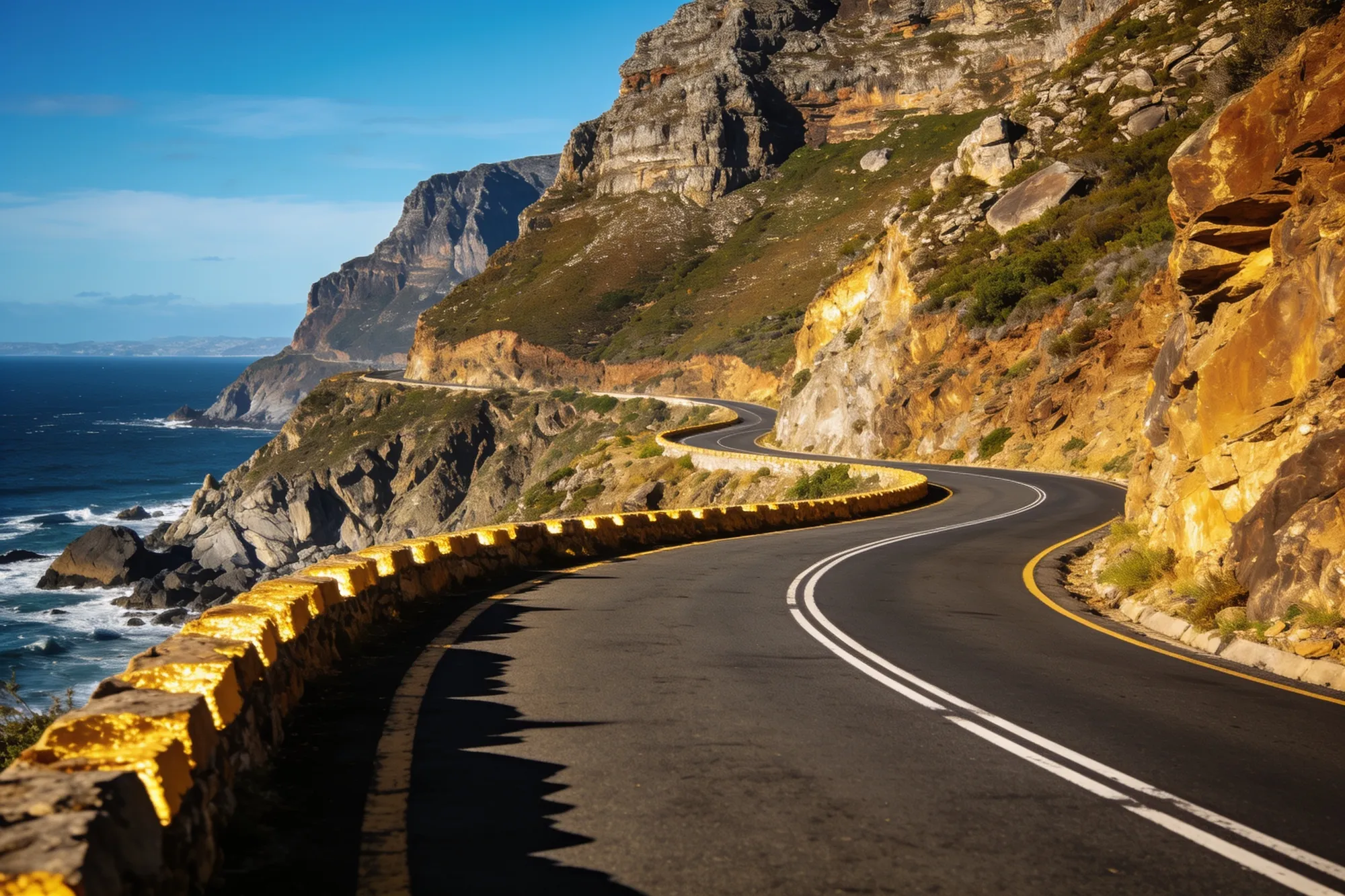
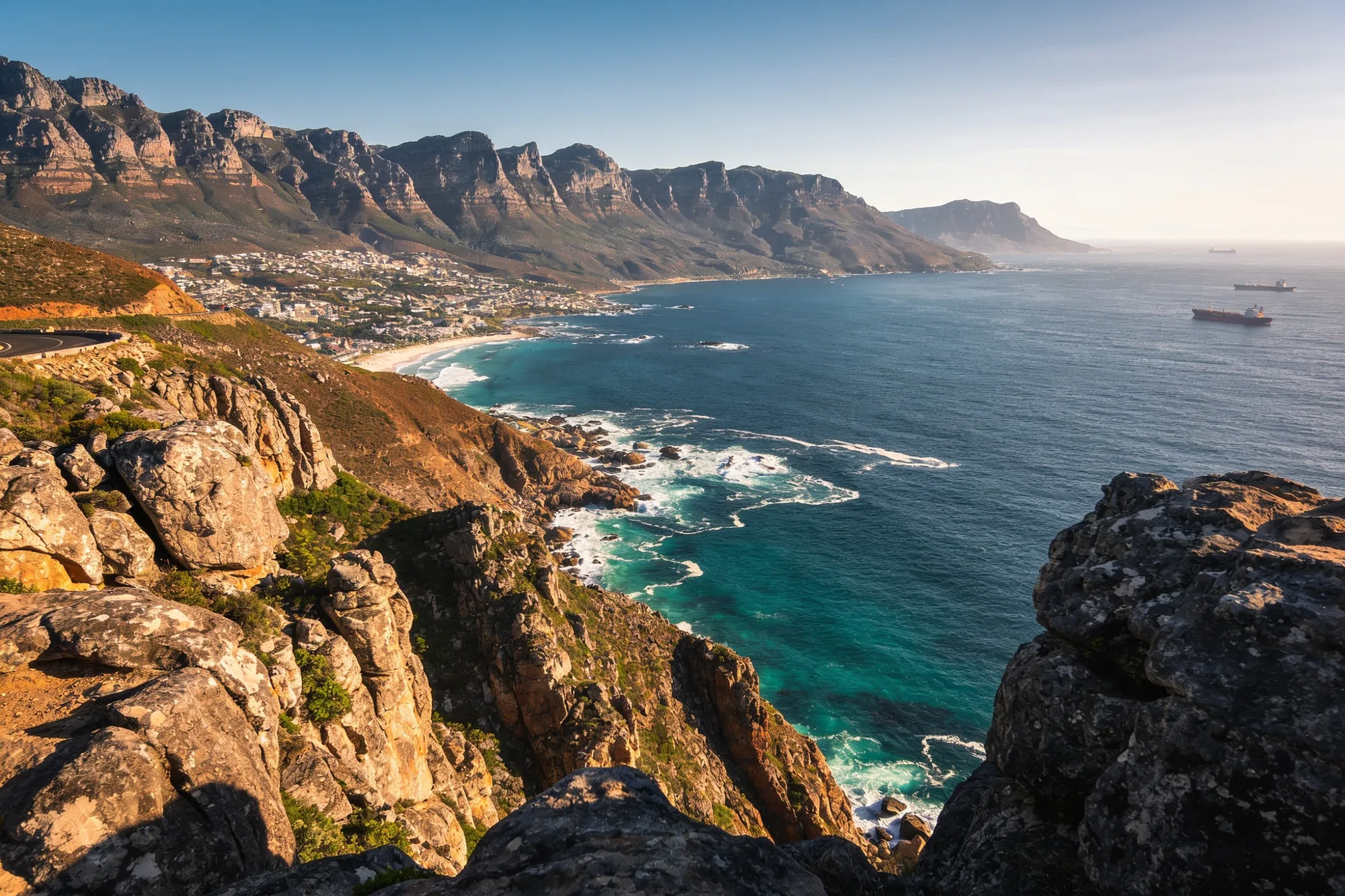
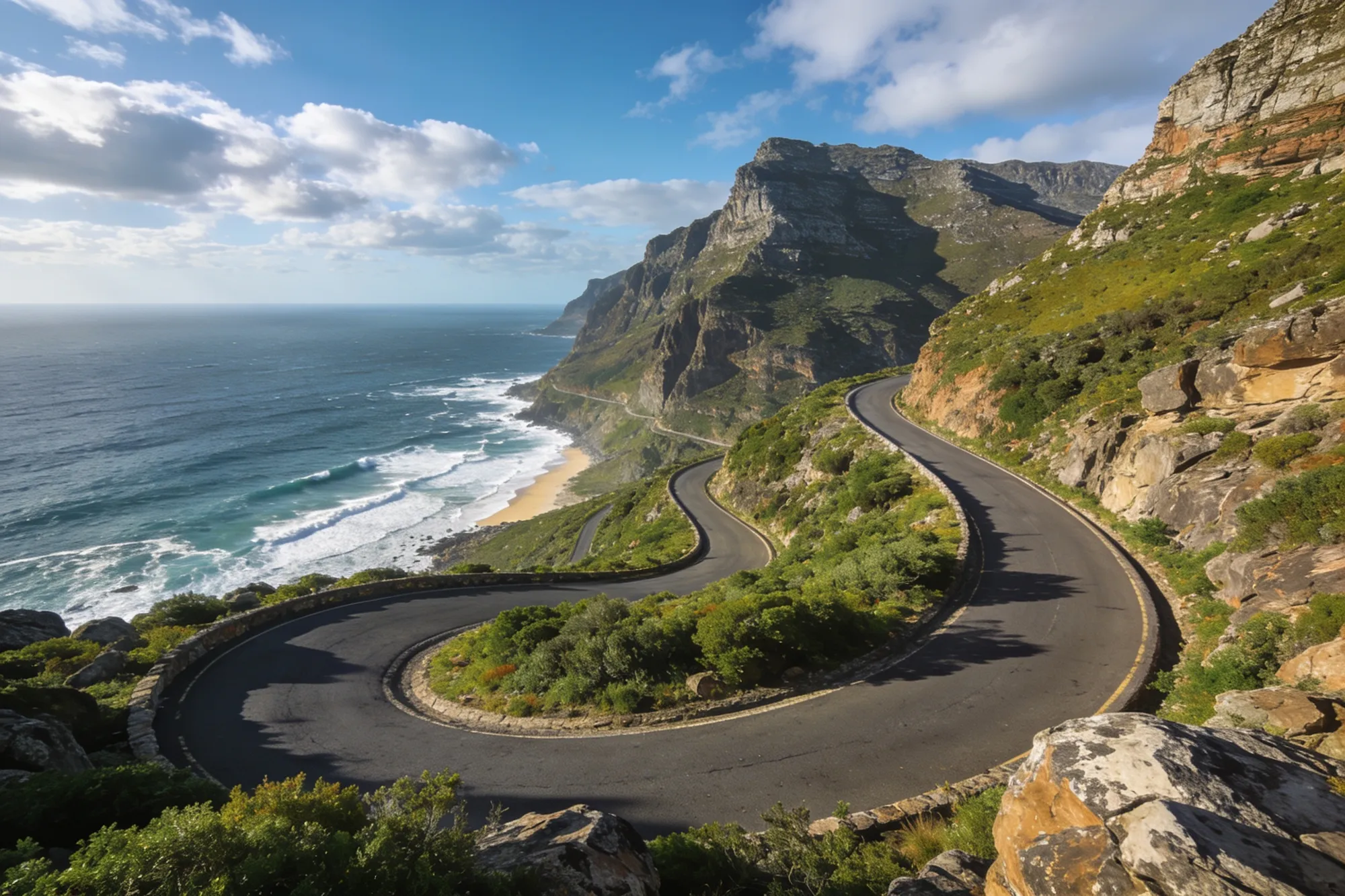
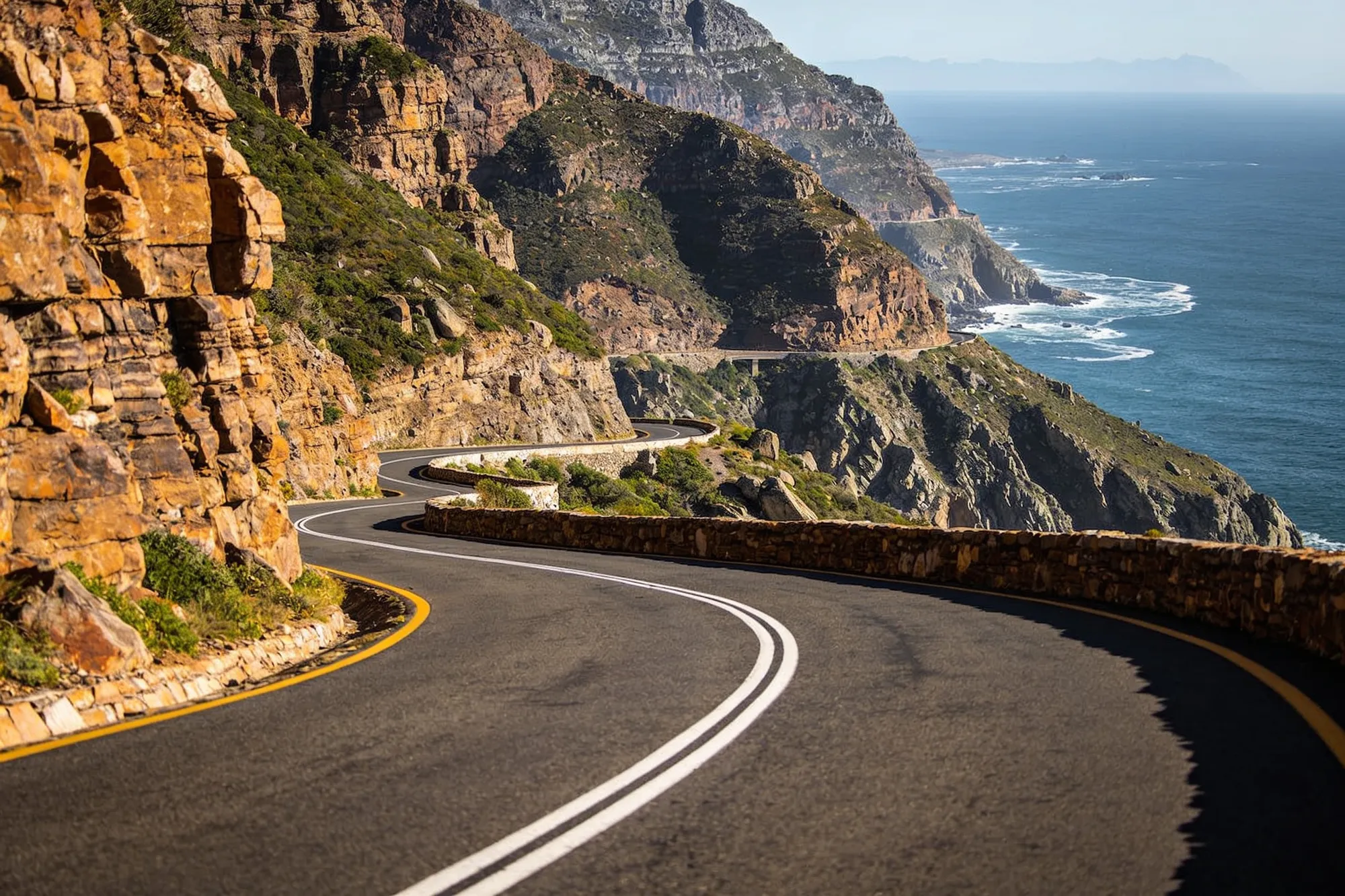
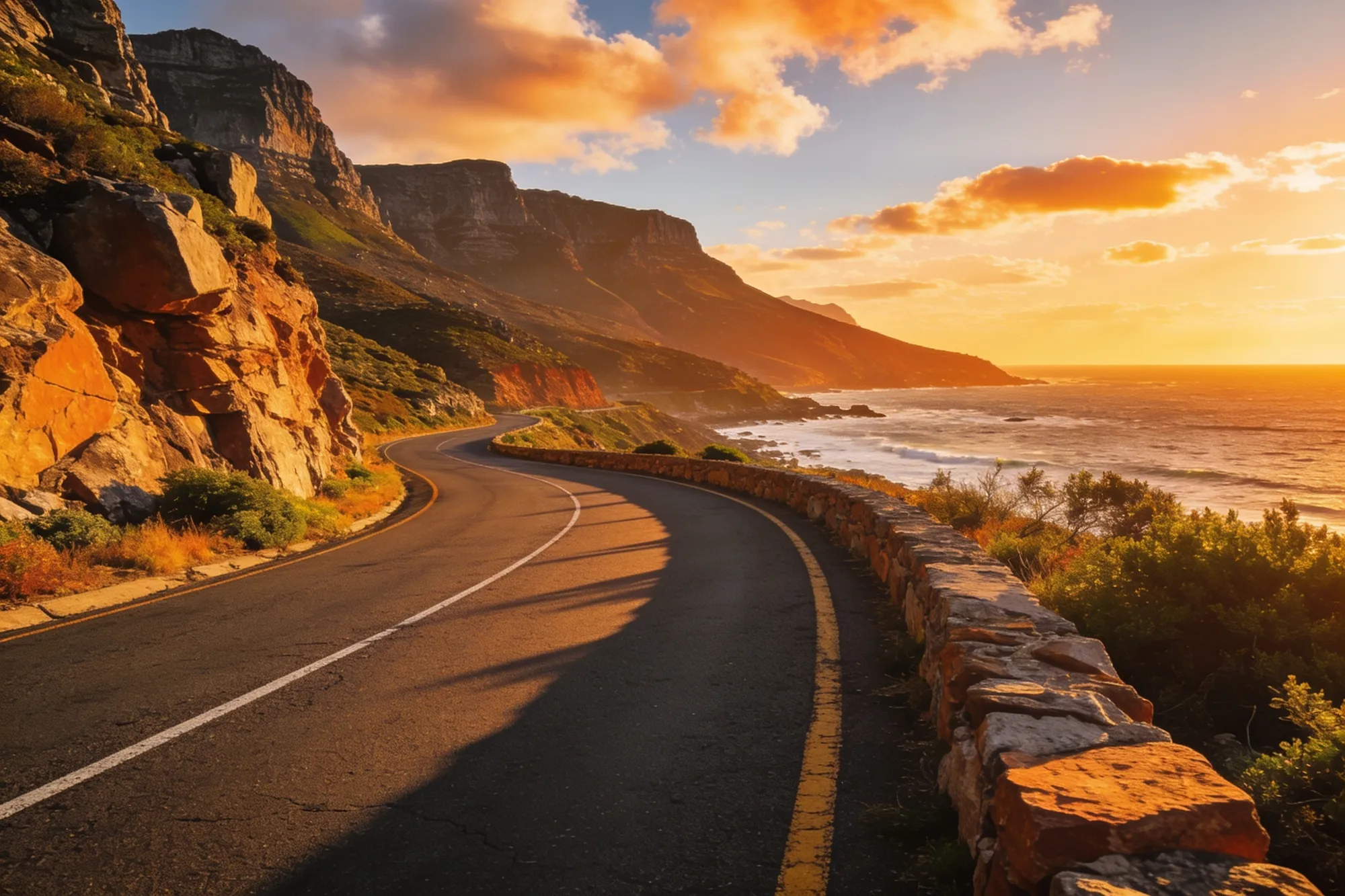
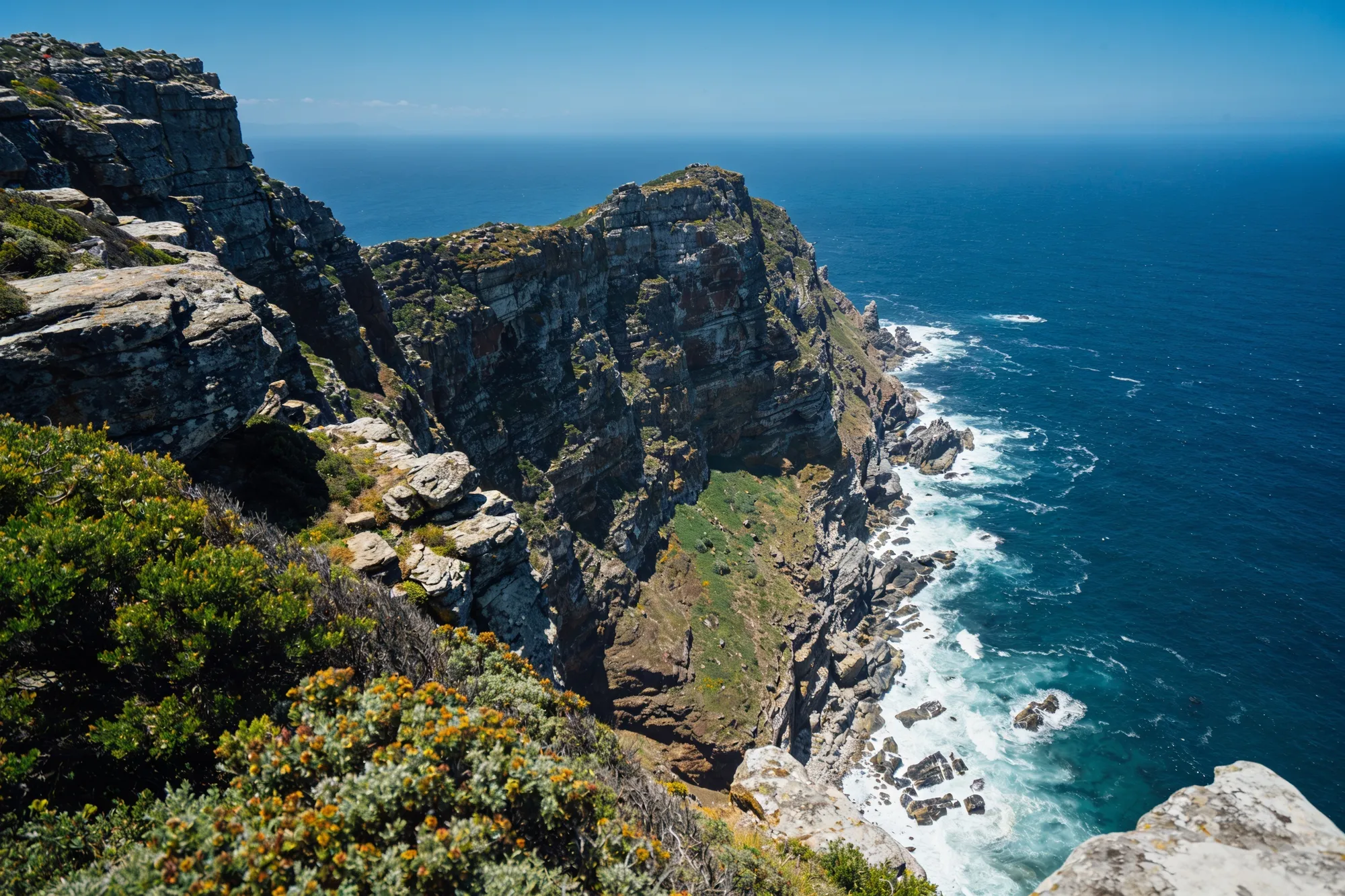
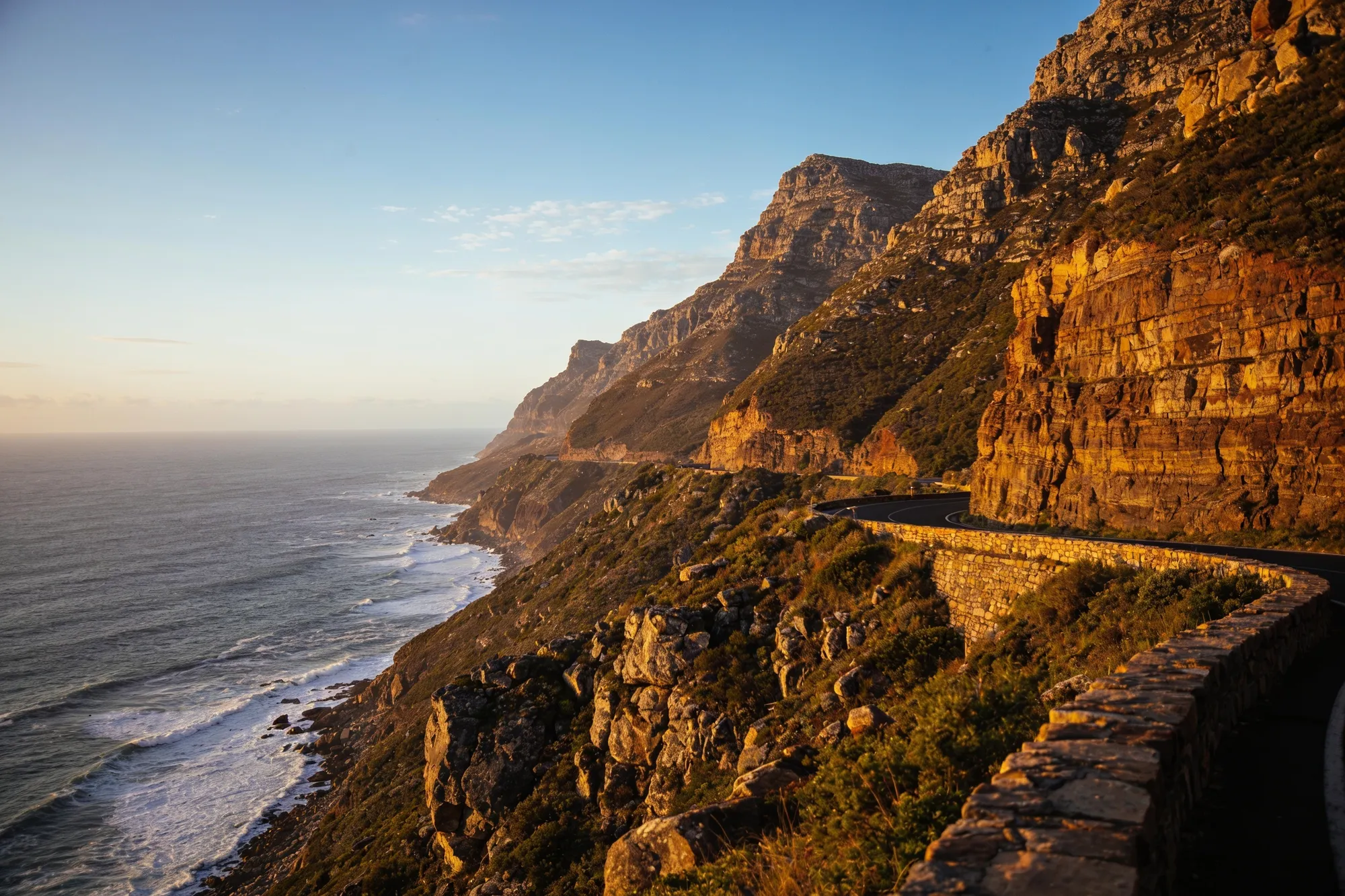
Chapman’s Peak Drive is one of the most spectacular stretches of road in the world, and a Cape Town experience in its own right. It runs for about nine kilometres along the Atlantic side of the peninsula, linking Hout Bay to Noordhoek, and it is carved straight into the cliff face: 114 curves with the sea dropping away far below on one side and rock rising sheer on the other. You can drive it in fifteen minutes, but that would miss the point. This is a road to take slowly, with the windows down and the viewpoints in mind.
The appeal is in stopping. Several pull-offs and picnic spots let you get out and take in the views, the best of them looking back over Hout Bay and its harbour, and the road is at its most beautiful in the afternoon and at sunset, when the Atlantic light hits the cliffs. It’s a toll road, with a small fee at the gate that pays for the netting and barriers protecting it from rockfall, and that protection matters, because the drive closes at times for high wind, fire or falling rock. Always check it’s open the morning you plan to use it, and keep the inland route over Constantia Nek in mind as a backup.
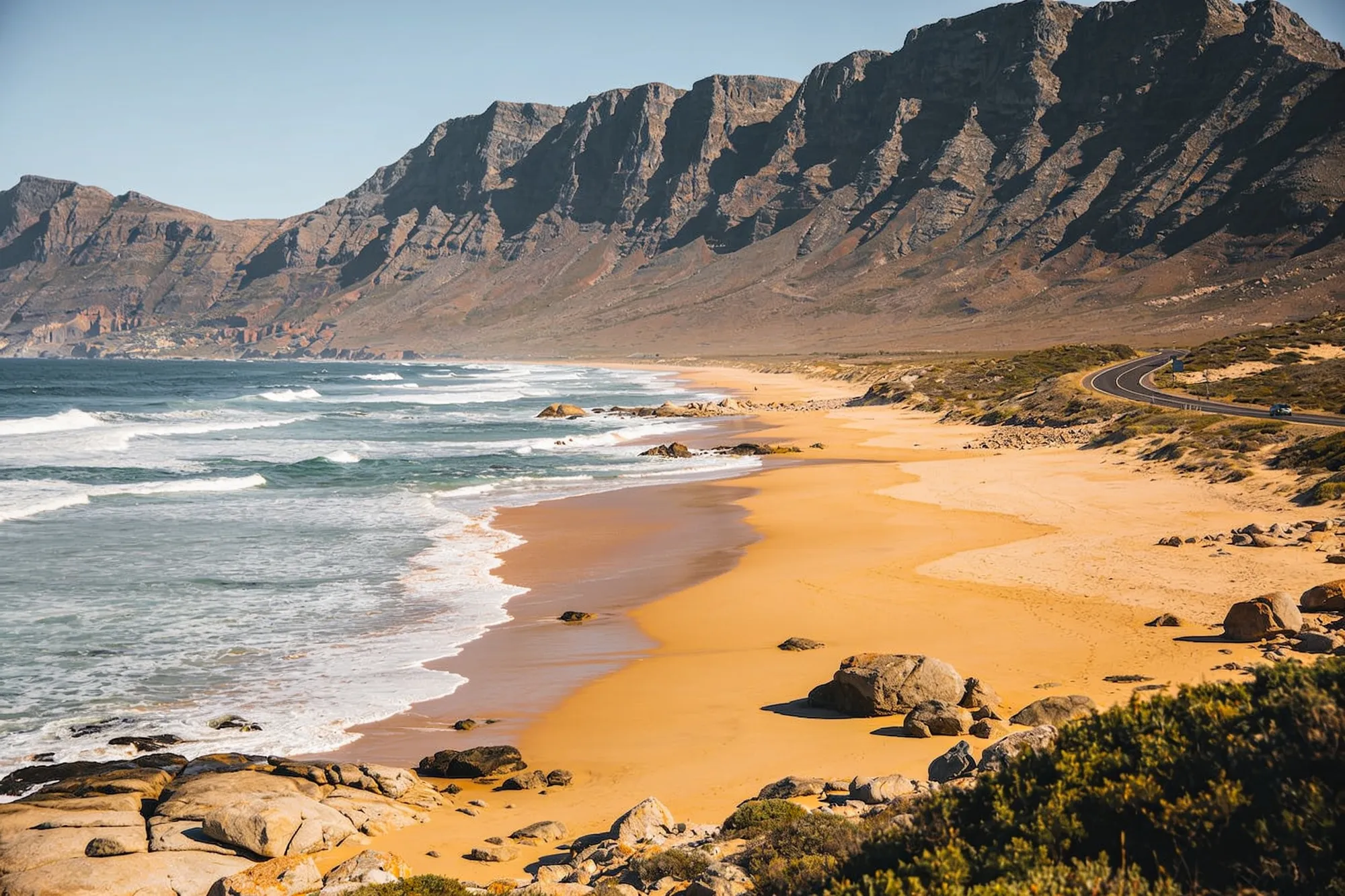
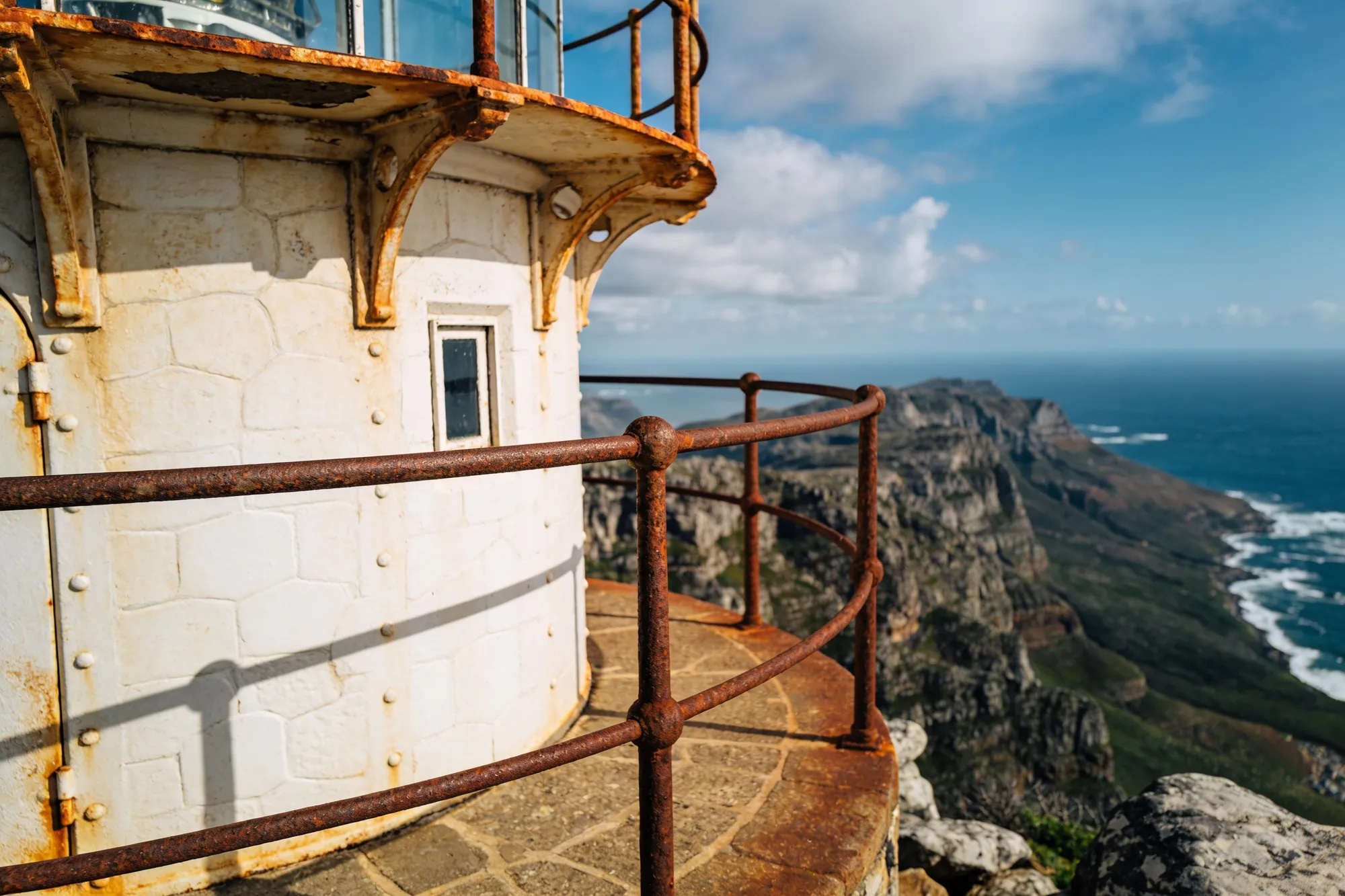
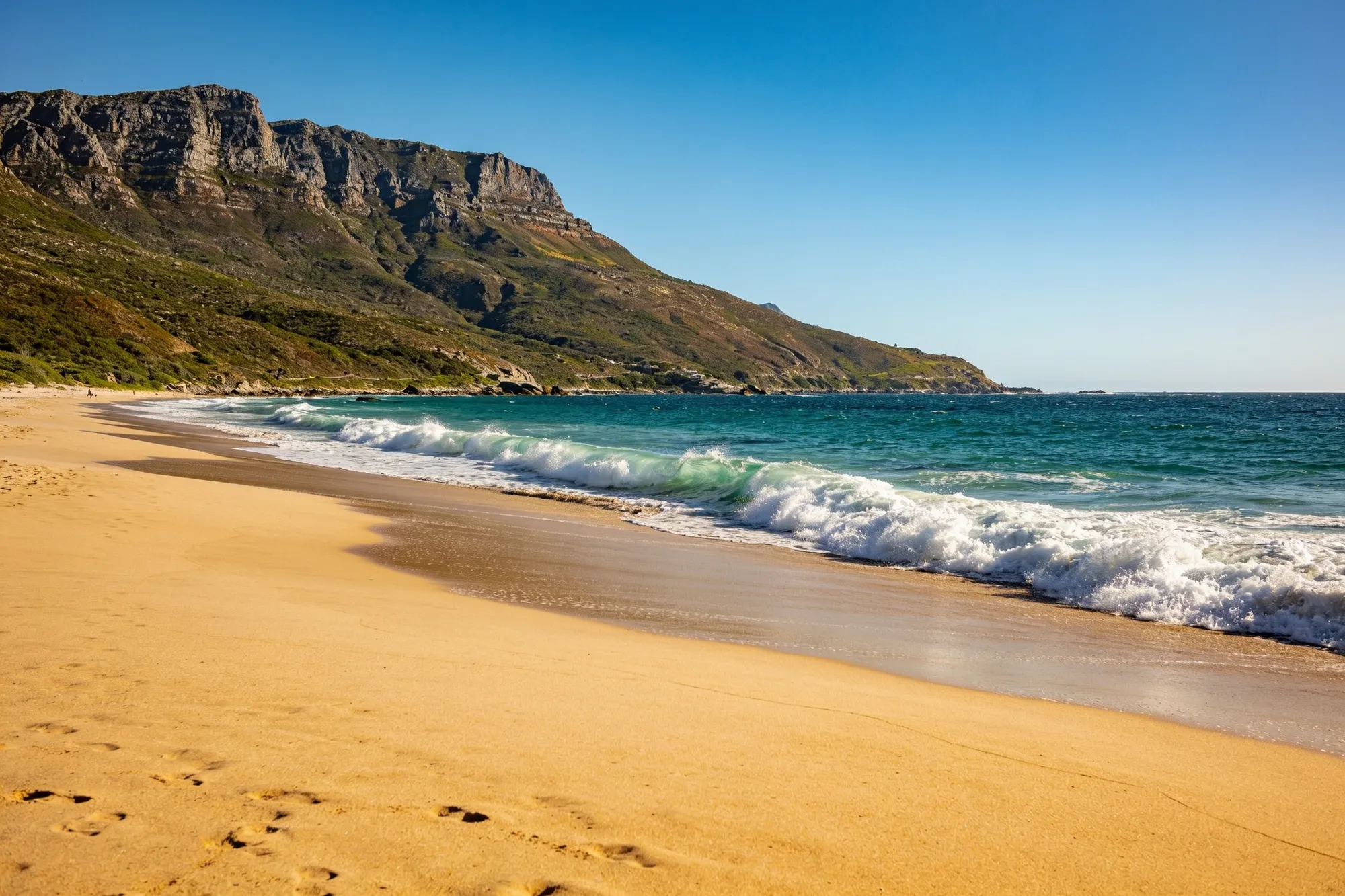
Most people drive Chapman’s Peak as part of a Cape Peninsula loop rather than as a separate trip, and that’s the right way to do it. The classic circuit runs out along the Atlantic seaboard through Camps Bay and Hout Bay, over Chapman’s Peak to Noordhoek, on to Cape Point and the penguins at Boulders Beach, and back along False Bay. The drive is the glamorous, cliff-hanging stretch of that day. Take it gently, watch for the cyclists who love it too, stop at the harbour in Hout Bay and the long beach at Noordhoek, and let the road be the highlight it deserves to be.