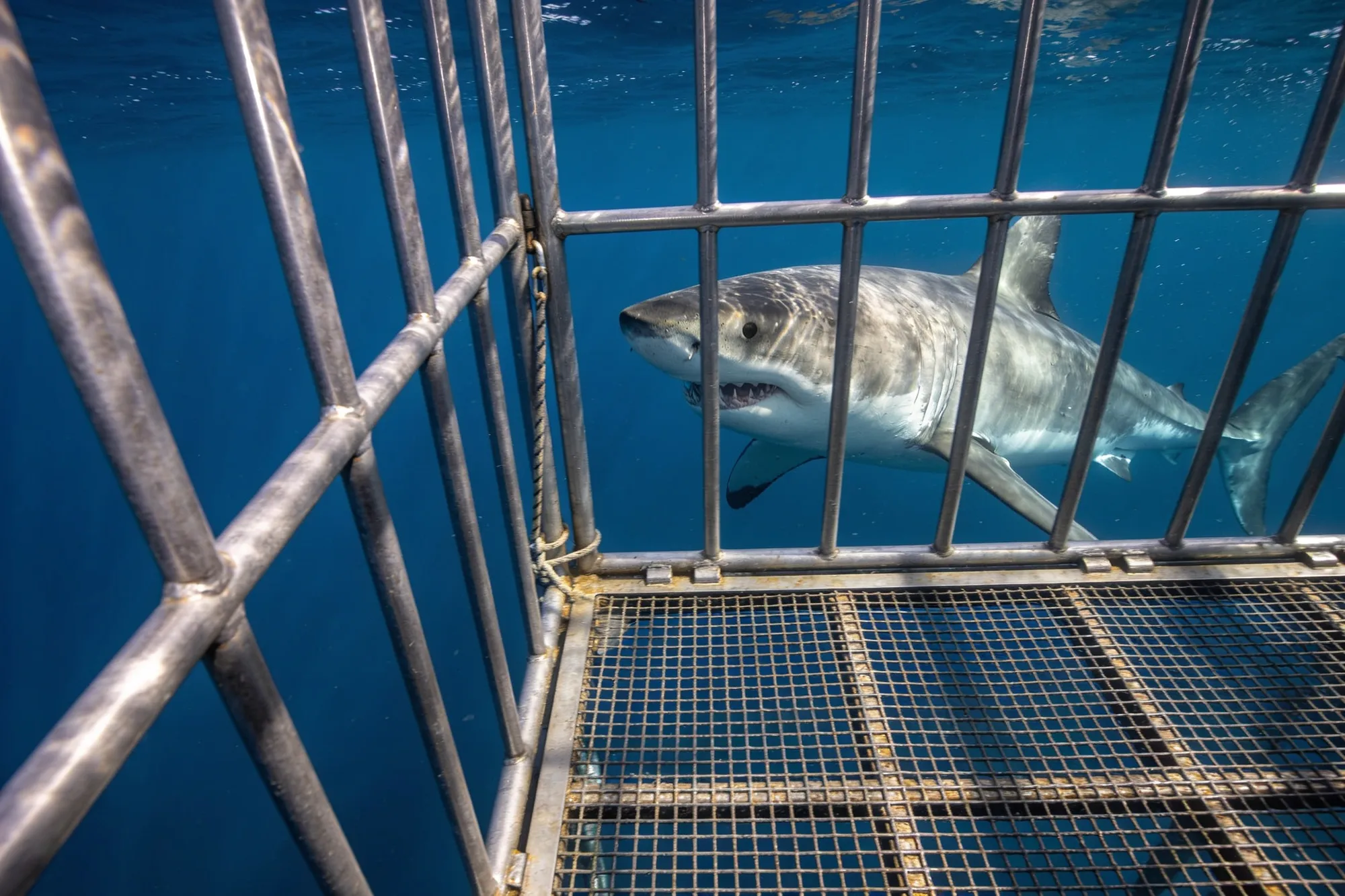
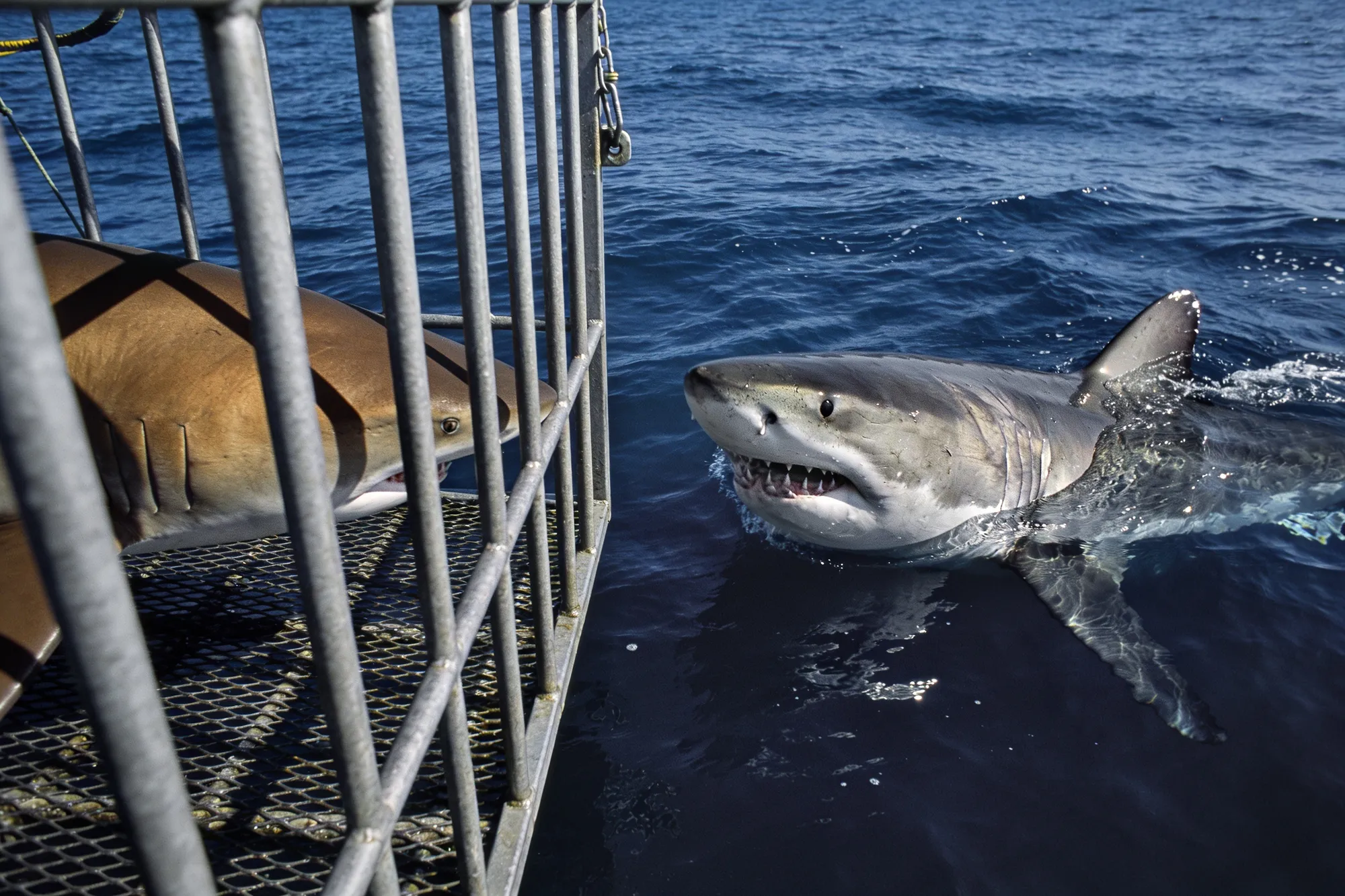
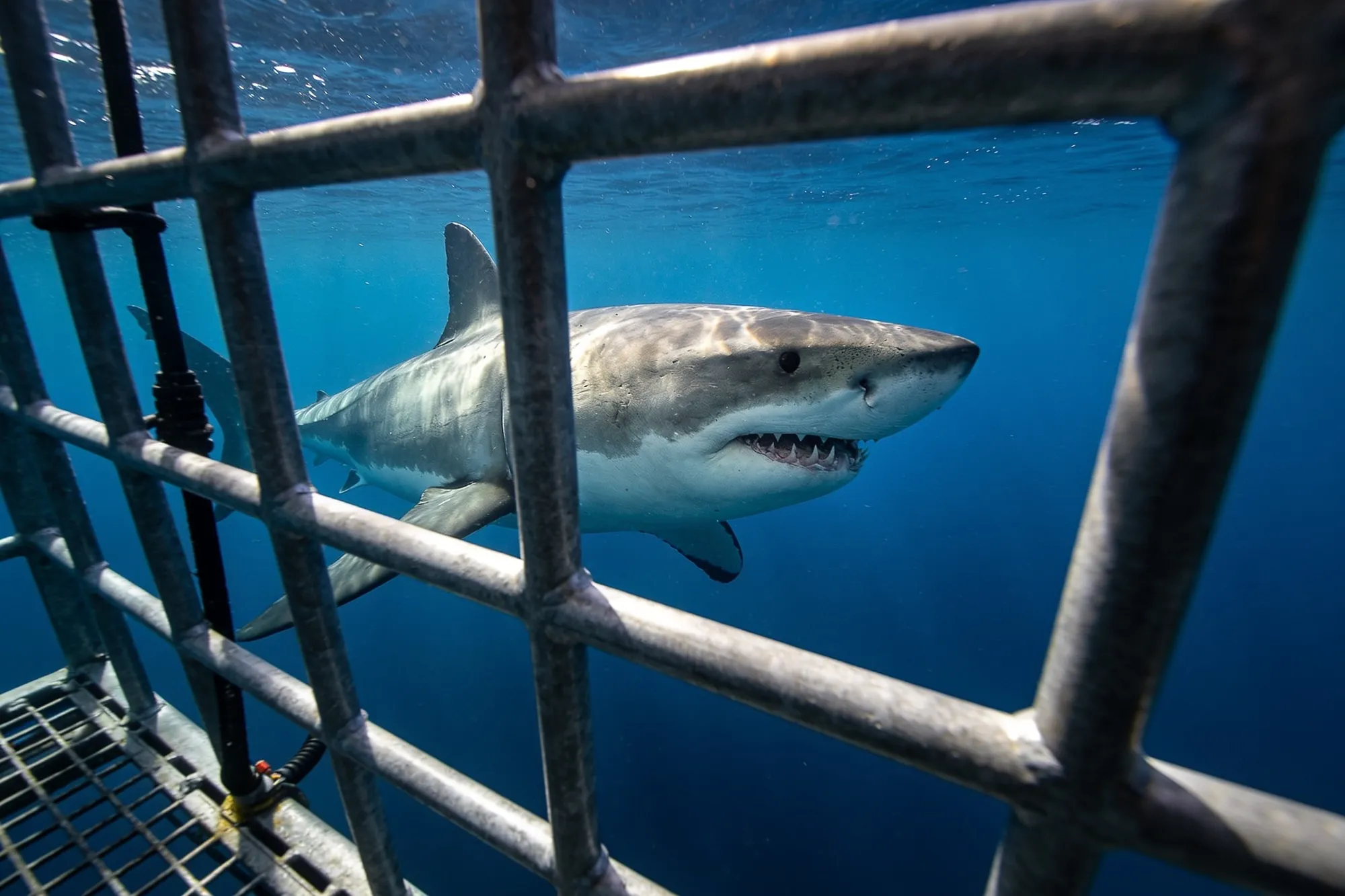
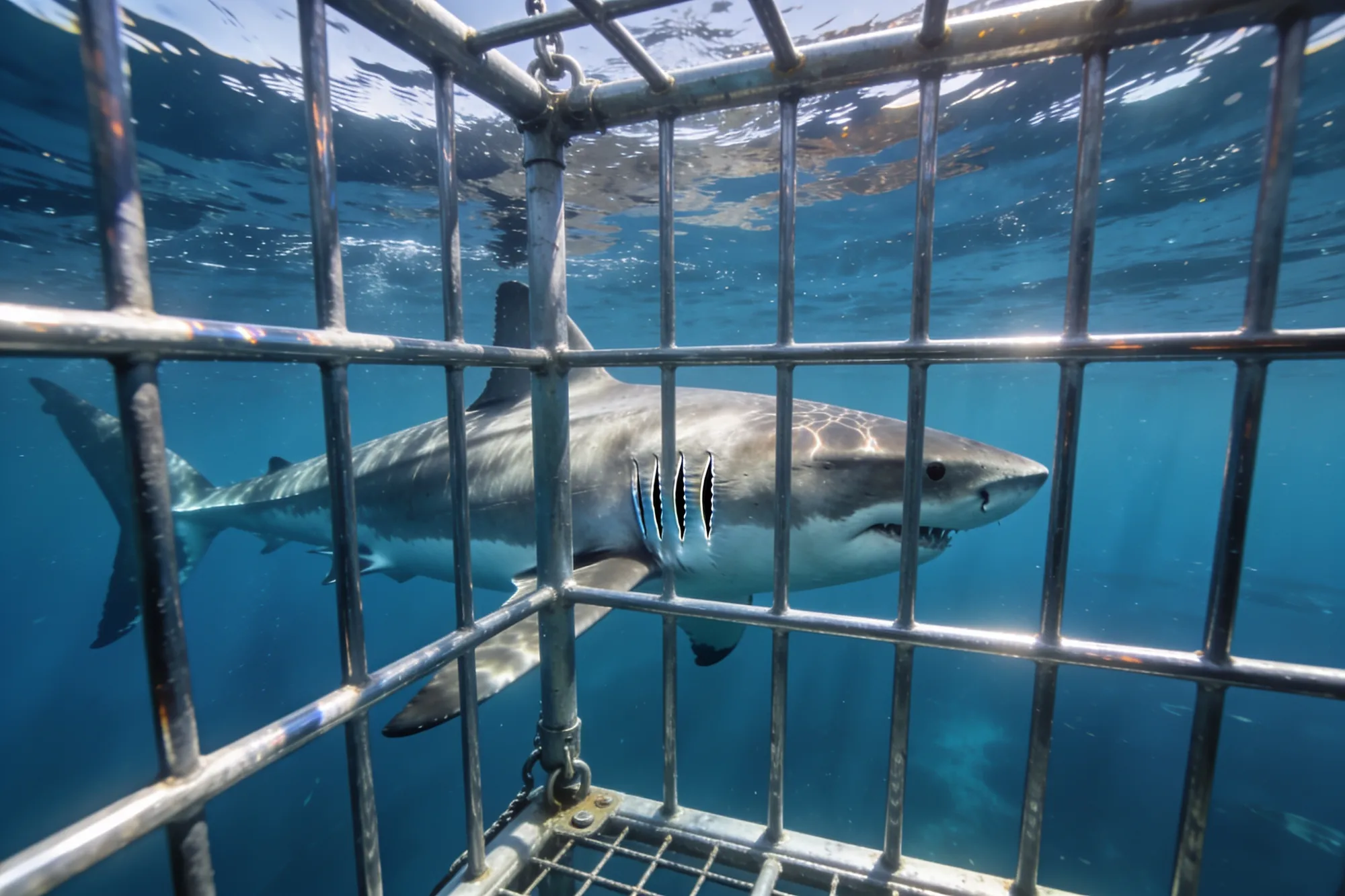
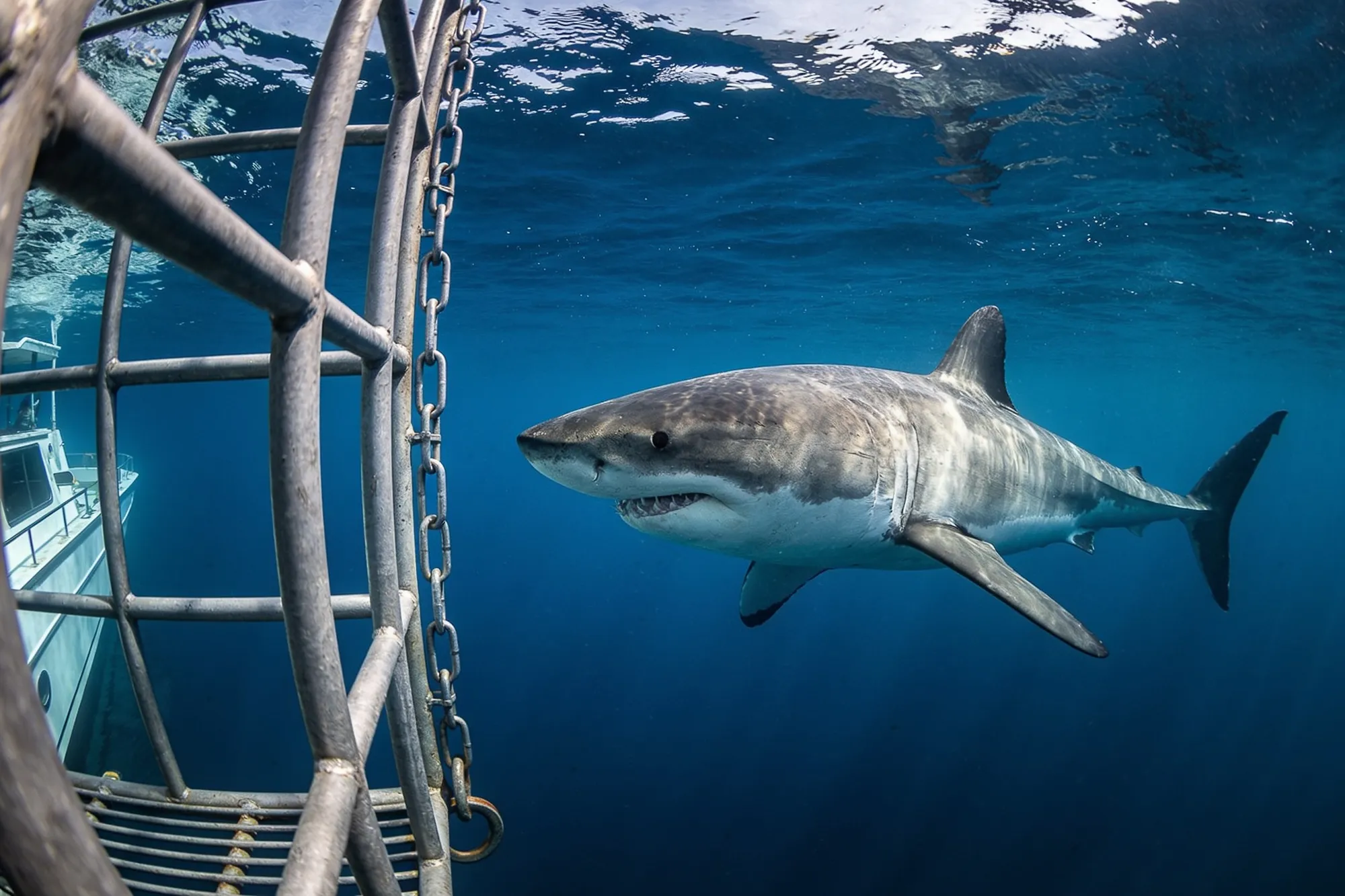
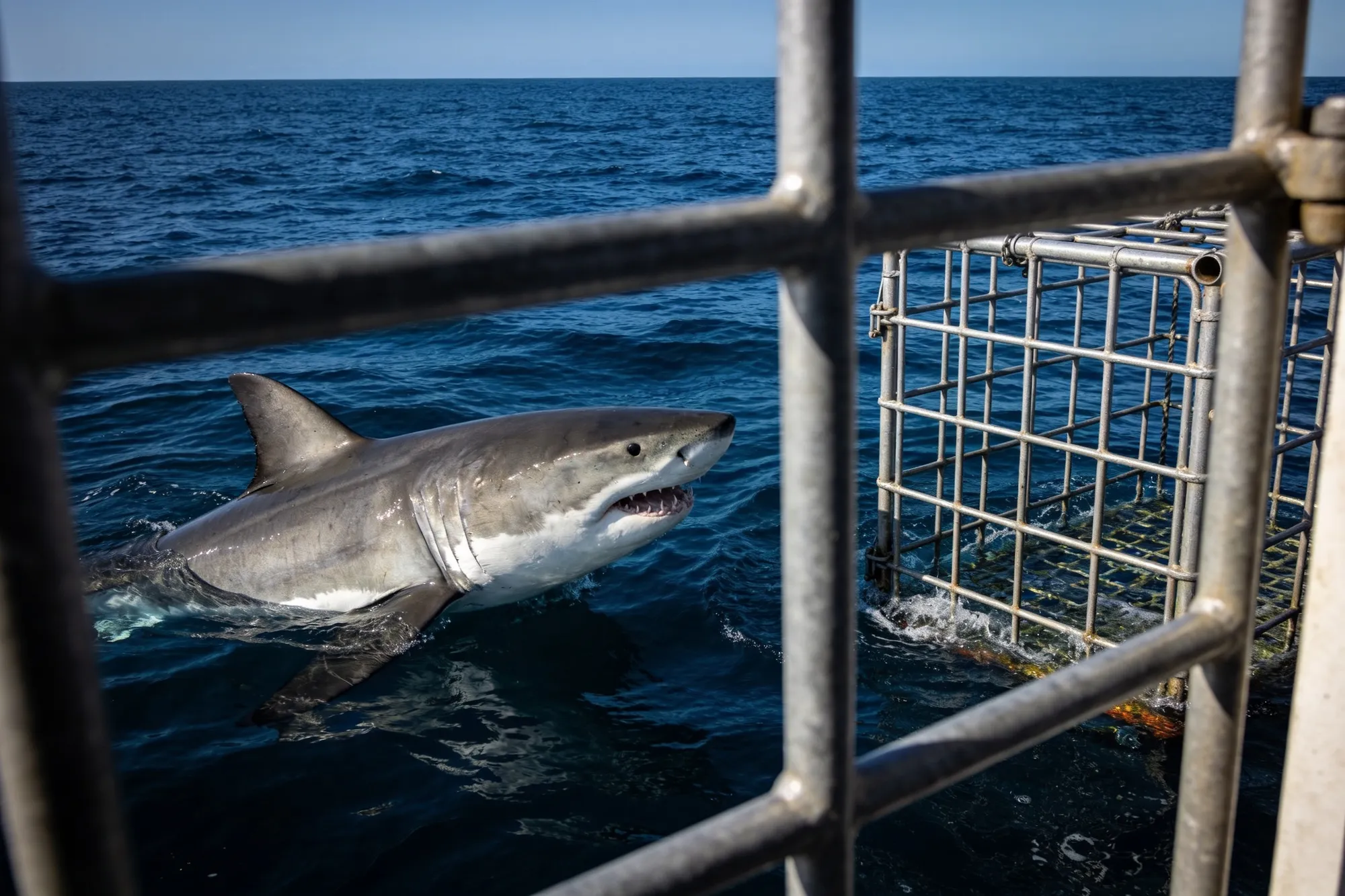
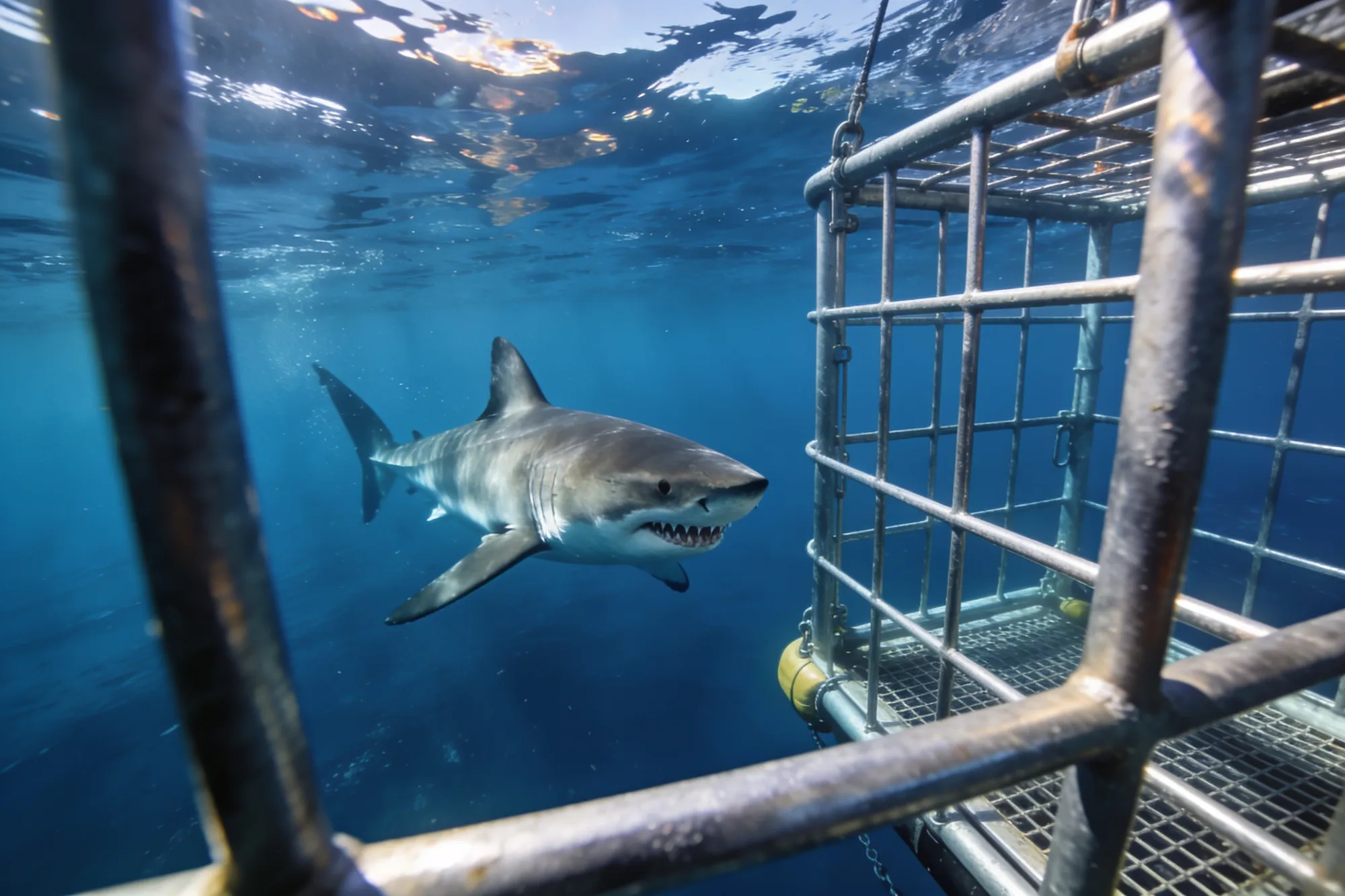
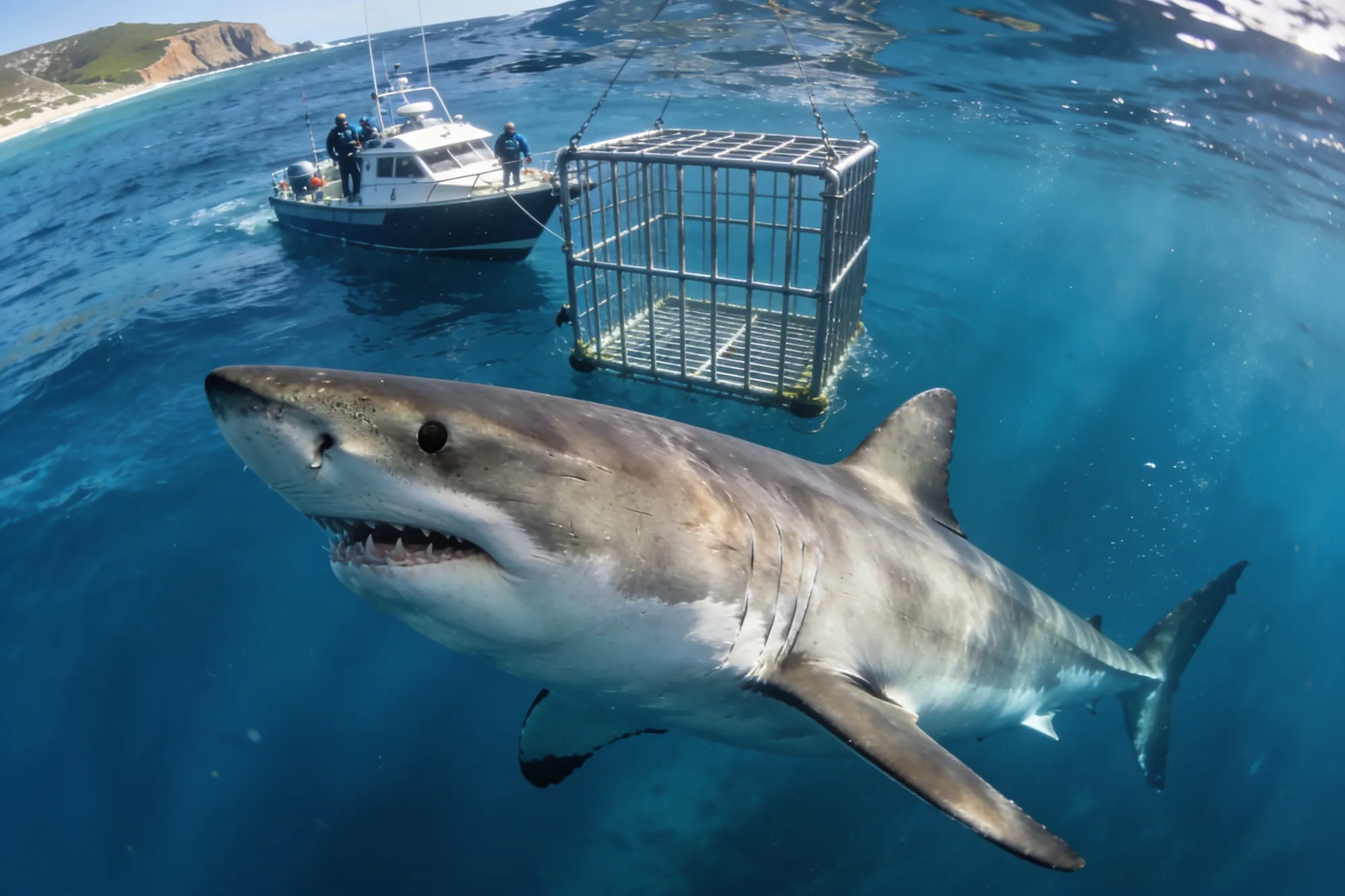
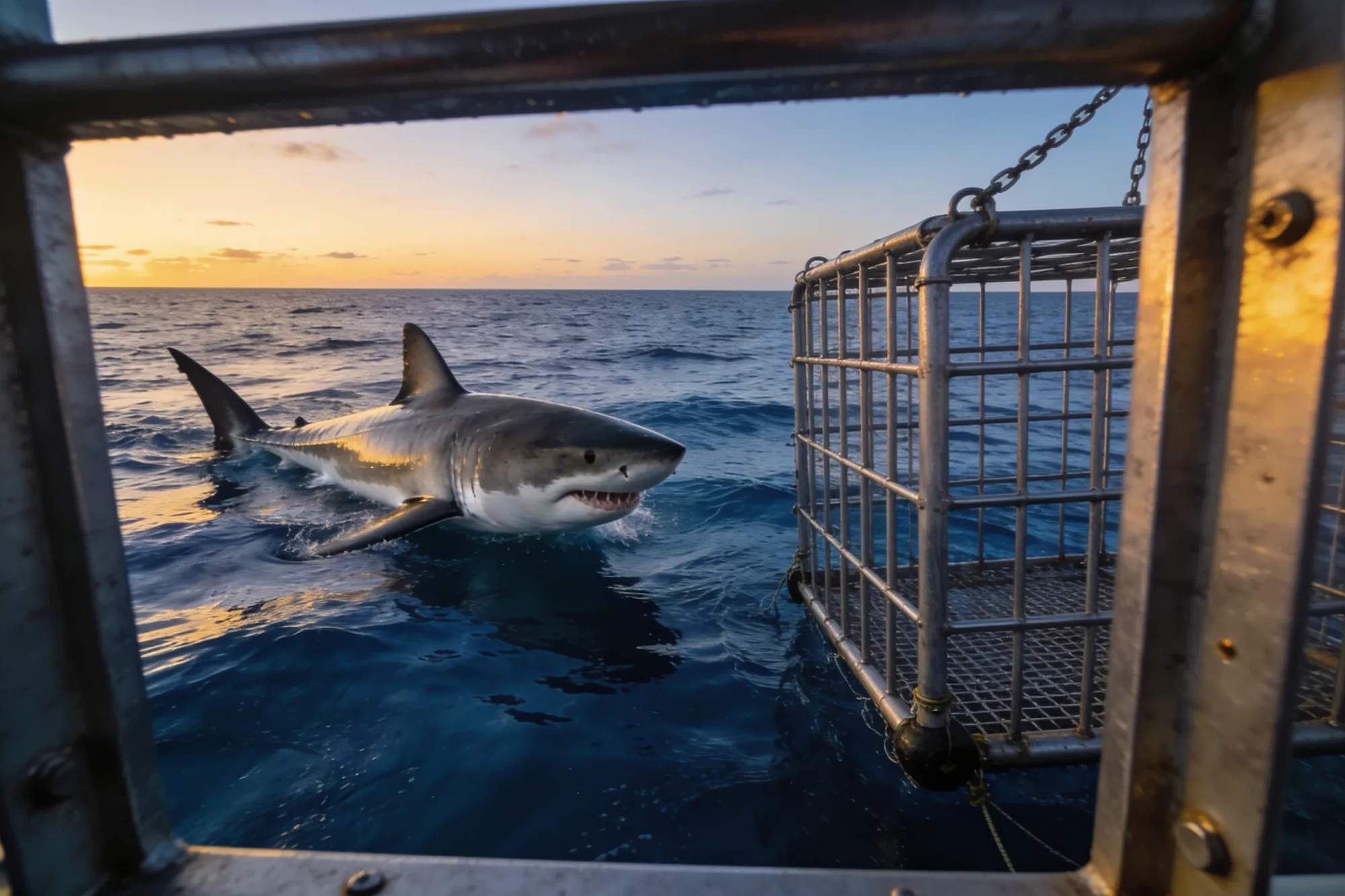
Shark cage diving is one of the things South Africa is most famous for, and it is also one where the reality on the water has shifted hard in the last decade. For years, the country was the most reliable place on earth to drop a cage beside a great white. That is no longer simply true, and any honest guide has to start there. Great whites are now critically endangered in South African waters, with only a few hundred thought to remain, and where you go decides what you will realistically see.
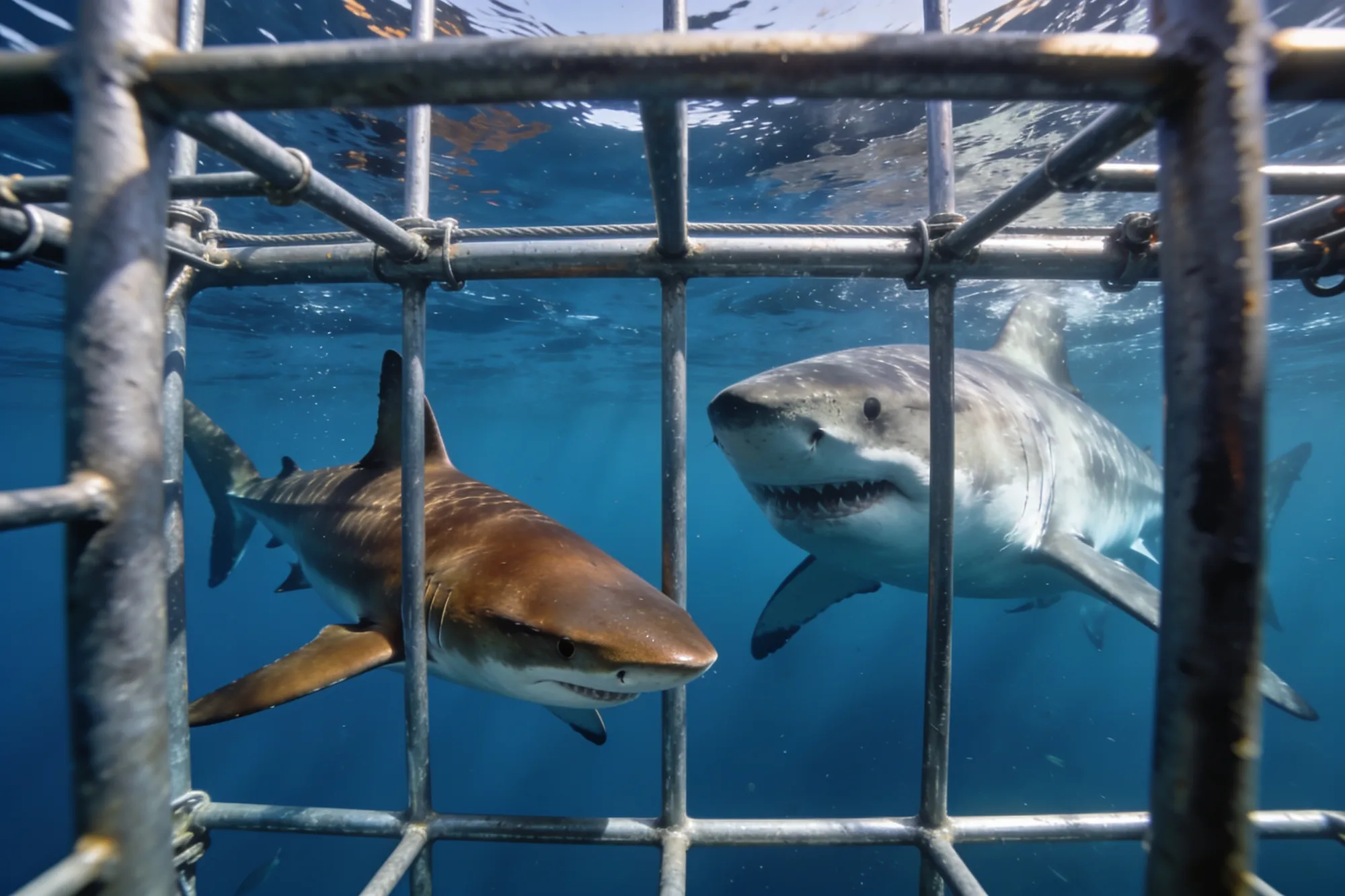
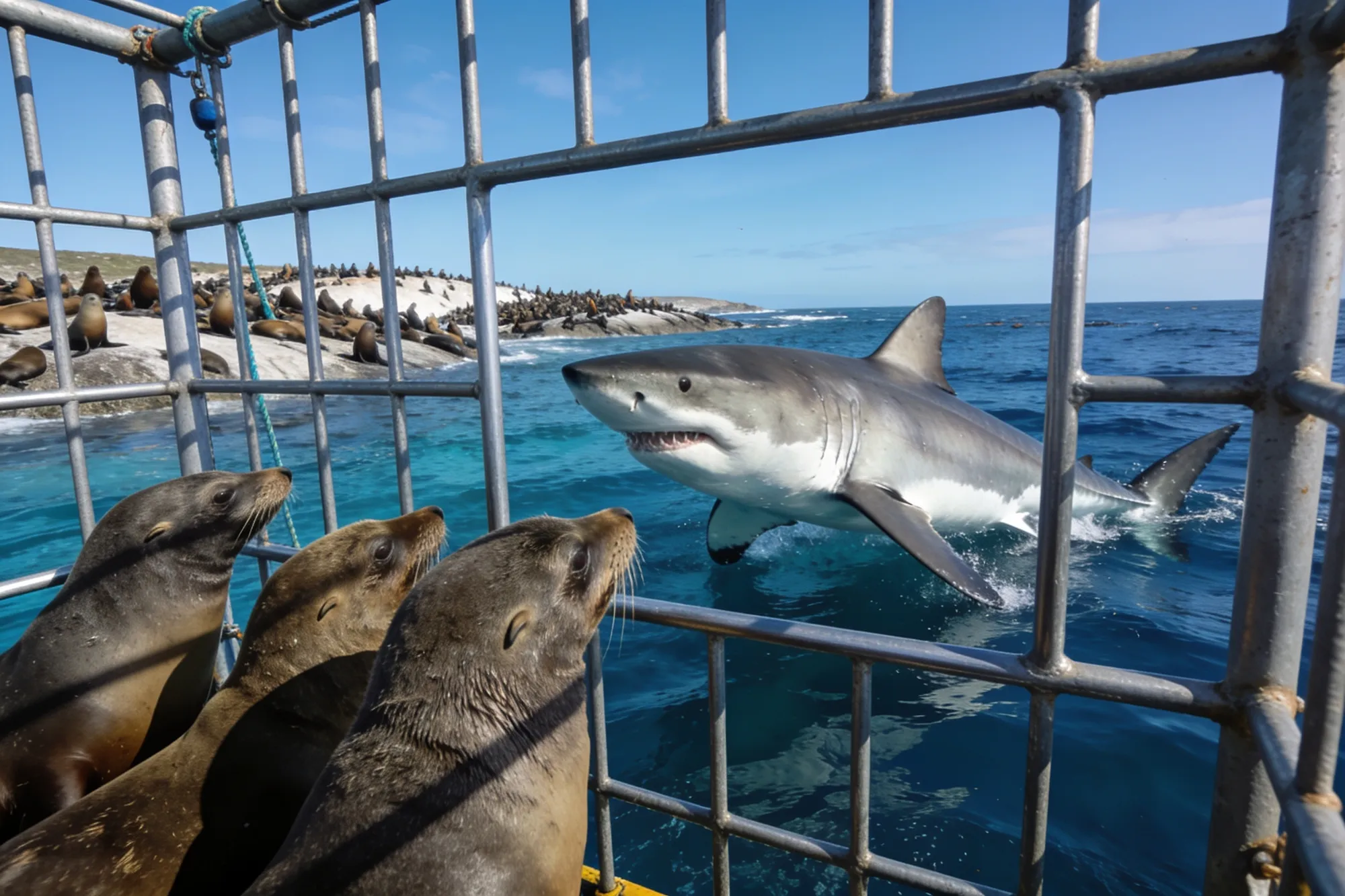
The cause of the change is worth understanding. Since 2017, a pair of orcas known as Port and Starboard have hunted great whites along this coast, killing them for their livers and driving the survivors away from their old haunts. The clearest casualty is Gansbaai, the original great white capital, where most trips now encounter bronze whaler sharks rather than great whites. Gansbaai is still the busiest, most established base, and our Gansbaai guide covers the harbour, Dyer Island and the boats. But if a great white is the point of your trip, Mossel Bay on the Garden Route has quietly become the better bet, with strong sightings continuing into 2026. False Bay, once world-famous for great whites breaching on seals at Seal Island, has all but lost them too, and those breaches are now history rather than something you can book.
That leaves two honest questions. The first is ethics: operators draw sharks to the boat with a chum trail, and whether that harms the animals is genuinely debated, with research-led operators like Marine Dynamics, tied to the Dyer Island Conservation Trust, arguing their data says it doesn’t. You don’t have to settle the argument, but go in informed and pick an operator whose practices you trust. The second is whether it’s worth doing at all. If you book it for a guaranteed great white, you may be let down. If you book it for the boat, the cage, the bronze whalers and the wider marine life, and choose Mossel Bay when a great white really matters, it remains a remarkable few hours on the water.