The Big Five is the most famous phrase in safari, and almost everyone gets it wrong. It is not a list of the biggest animals, or the most beautiful, or the rarest. It was coined by big-game hunters for the five animals considered the most dangerous to hunt on foot: lion, leopard, elephant, buffalo and rhino. The label stuck, the safari industry adopted it as a marketing checklist, and now visitors arrive determined to tick off all five as if a trip succeeds or fails on the tally. It’s worth knowing what the term really means, because a good safari is about much more than five boxes.
This article is about the animals themselves, what they are and how to read them. Where to actually go to see them, which parks and reserves suit which animal, is covered in our safari guide and our Kruger camp pages, so we won’t repeat it here. Think of this as the field notes: who’s who in the Big Five, and what the list leaves out.
Lion
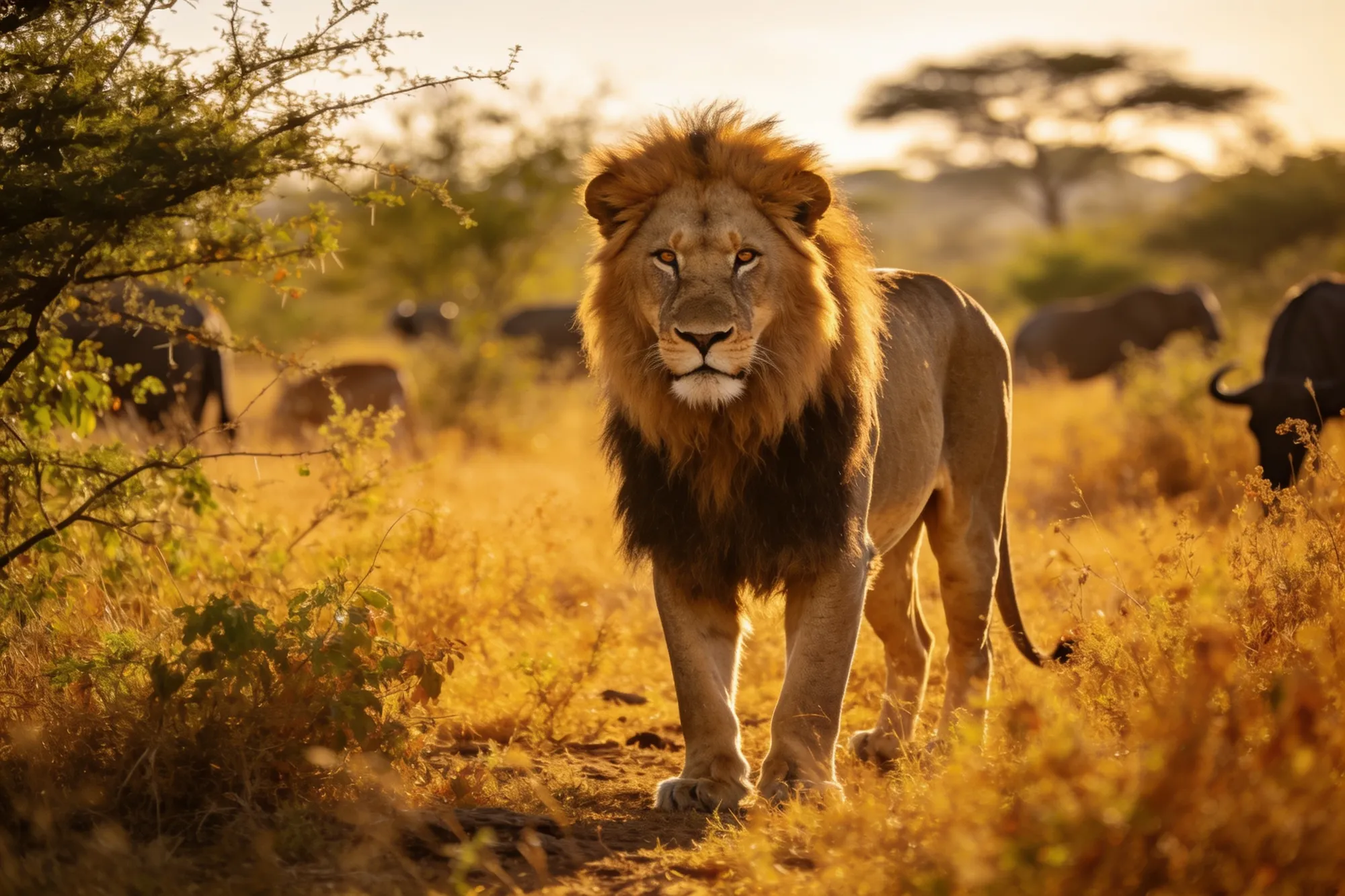
The lion is the one most people picture, and the most social of the cats. Prides of related females and cubs, with a coalition of males holding territory, spend most of the day asleep in the shade and do their hunting in the cool and the dark. That means the best sightings are at first light and last light, and that a midday lion is usually a flat, panting lump under a tree. Listen for roaring at dawn and dusk, a sound that carries for kilometres. Lions are common in the right country, the open grasslands where the herds graze, so of the Big Five they are among the easier to find.
Leopard
The leopard is the prize, because it is the hardest of the five to see in the wild. Solitary, nocturnal and secretive, it spends the day draped along a branch or hidden in thick riverine bush, and on a self-drive you can pass within metres and never know. This is the single animal where a guided private reserve changes everything: in places where the cats are used to vehicles and rangers can drive off-road to a sighting, a leopard goes from a stroke of luck to a near-certainty. Elsewhere, scan the big trees along the rivers, and watch for impala staring fixedly in one direction.
Elephant
The elephant is the giant of the list and, for many people, the most moving to watch. Breeding herds of related females and calves move through the bush led by a matriarch, while older bulls roam alone or in loose bachelor groups. They are intelligent, emotional and, when they want to be, completely silent despite their size. Give them room, especially a herd with small calves or a bull in musth, and read the warning signs, spread ears, a shake of the head, a mock charge. South Africa’s parks hold large, healthy elephant populations, so seeing them is rarely the problem. Watching them well, and respectfully, is the skill.
Buffalo
The buffalo is the one visitors underrate, and the one hunters feared most. A herd of a few hundred grazing across a plain is an unremarkable sight until you understand the animal: unpredictable, powerful, and dangerous when wounded or cornered. Old bulls pushed out of the herd, the so-called dagga boys caked in mud, are especially short-tempered. Buffalo are common and easy to see, but they earn their place on the list for temperament rather than scarcity. Watch a herd move as one when lions are near and you understand the tension that runs through the bush.
Rhino
The rhino is the Big Five animal whose story is the hardest. South Africa holds most of the world’s rhinos, but they are under relentless pressure from poaching for their horn. The numbers move every year, and they are sobering: around 350 rhinos were killed by poachers across the country in 2025, and Kruger, once the great stronghold with many thousands of white rhino, now holds only a couple of thousand after years of losses. The fight back has changed what you see. Many rhinos in Kruger and the private reserves have now been dehorned as a deterrent, so the animal you watch may be hornless, and guides increasingly keep rhino sightings off the radio to protect them. Seeing a rhino at all is a privilege, and a reminder that the Big Five is a living, threatened list rather than a fixed one.
Good to know: if you see a dehorned rhino, that's conservation at work, not an injury. Removing the horn under sedation, painlessly, makes the animal a far less valuable target for poachers.
Beyond the five
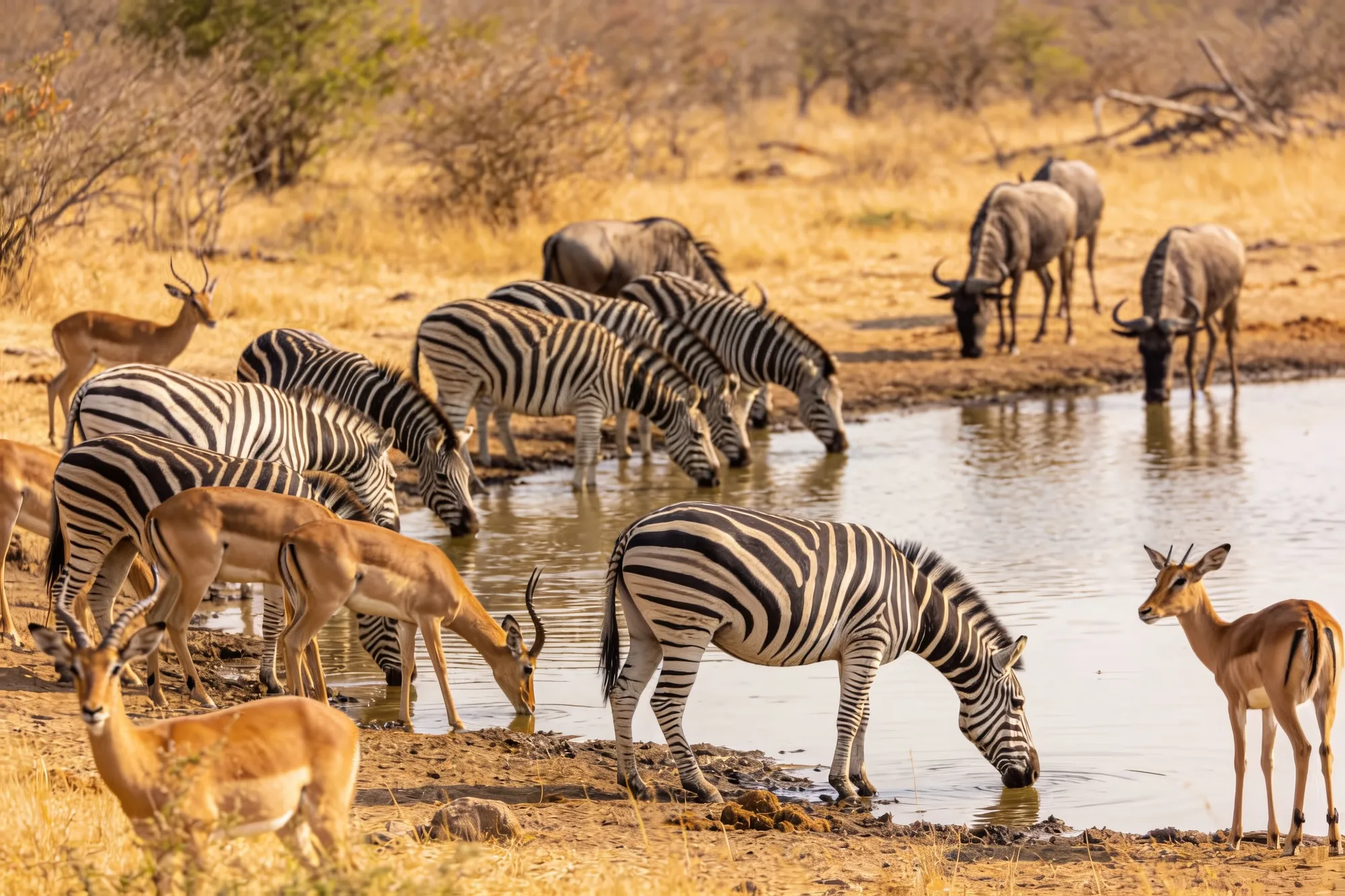
Here is the honest part: the Big Five is a hunting-era leftover, and fixating on it makes for a worse safari. Some of the most thrilling sightings aren’t on the list at all. The cheetah, built for the sprint and quite different from a leopard. The endangered, fast-moving African wild dog, which many guides rate above any of the five. Giraffe, hippo, and the great herds of zebra and antelope that make the whole system work. There’s even a tongue-in-cheek “Little Five”, the elephant shrew, buffalo weaver, leopard tortoise, ant lion and rhino beetle, invented to make the point. And for many visitors the birds, several hundred species, become the quiet obsession of a trip.
So treat the Big Five as a fun thread, not the plot. Go in wanting to understand the bush, the behaviour and the relationships between animals, rather than racing to complete a checklist, and a slow morning watching a single herd will beat a frantic dash between sightings. Our safari guide will help you choose where to go for the best chance at each of the five, and our Kruger pages cover the camps and reserves in detail. The animals will do the rest.
Ready to see them?
Book a guided game drive or a safari and put the Big Five in front of you, with our partner.